Blind appraisal test · estimates locked October 1, 2026

Roundhouse

67 live eBay listings from a single seller — Northwest Coast, Plateau and Alaska basketry, African trade beads, amber and Native American ephemera — appraised from their photographs and titles alone, before the auctions closed. Each estimate is a prediction of the final eBay price; the actual results are filled in as listings end.

67listings
596photographs
$11,155total estimate
$6,608–$18,695combined range

How this test works

Attributions are made from photographs only and are hedged accordingly; nothing here is an authentication. Items flagged for feathers, restricted animal material or possible cultural sensitivity are noted where they appear.

All listings

#ListingConfidenceRangeEstimateActual
Klickitat & Plateau Basketry$840
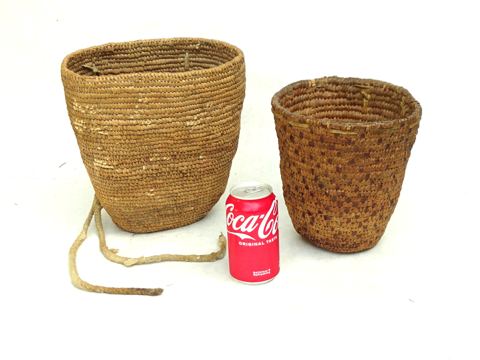
1Two worn Plateau coiled cedar-root utility basketsMedium$150–$400$250pending
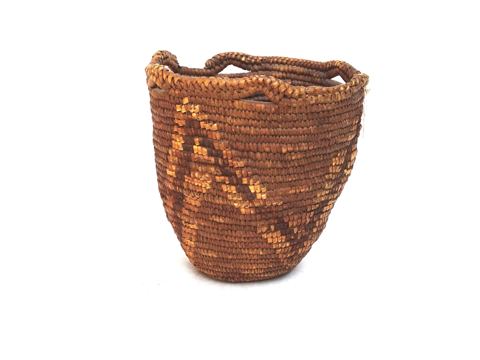
2Klickitat-type looped-rim coiled berry basketMedium$175–$450$275pending
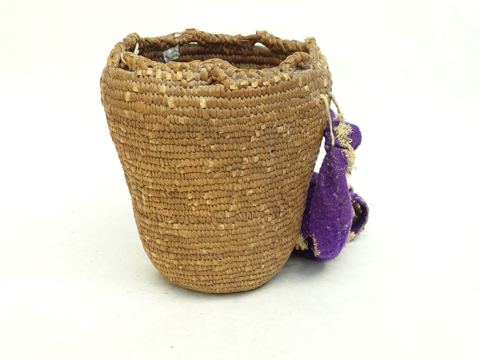
3Small Klickitat coiled cedar-root basket with wool strapMedium$125–$375$225pending
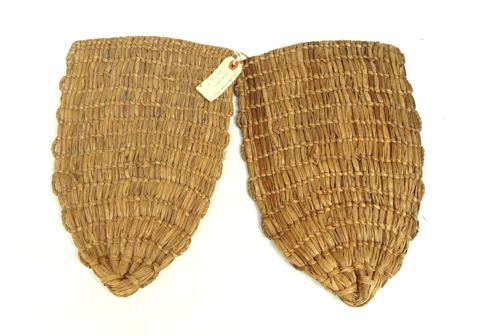
4Pair of Plateau twined tule/reed fansLow$50–$175$90pending
Salish & Coast Coiled Basketry$850
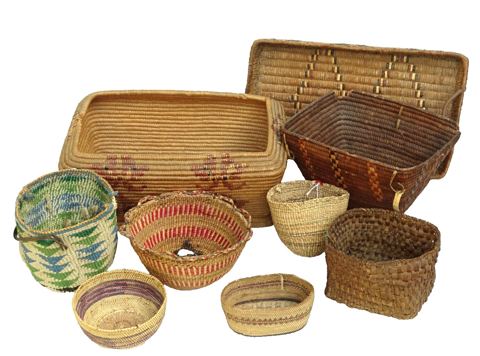
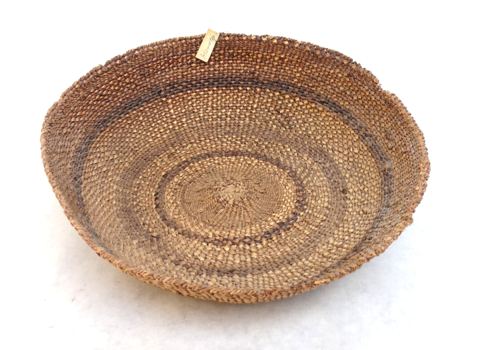
5Nine mixed Northwest Coast and Plateau basketsLow$400–$1,000$650pending
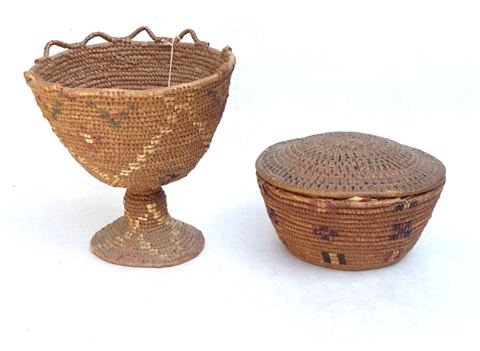
6Two Interior Salish imbricated coiled baskets (goblet and lidded)Medium$120–$325$200pending
Twined & Woven Basketry$2,255
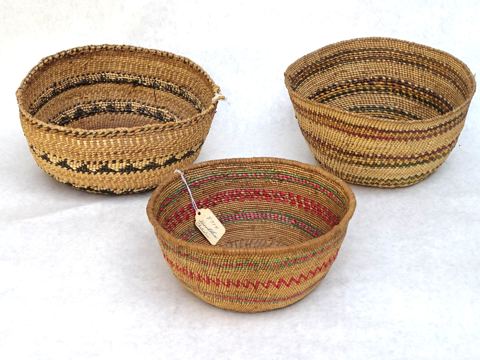
7Three Southern Coast Salish twined bowl basketsMedium$300–$700$450pending
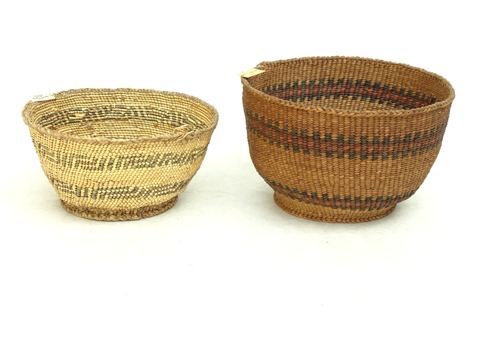
8Two Washington coast twined bowl basketsMedium$150–$400$250pending
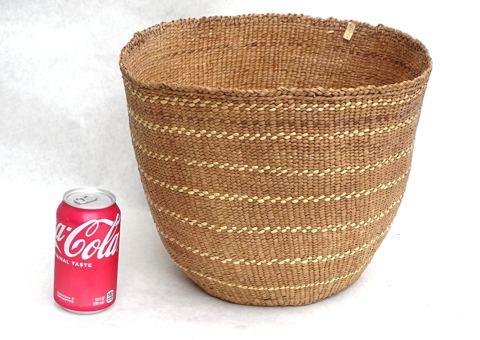
9Large Nuu-chah-nulth (Nootka) twined storage basketMedium$140–$350$225pending
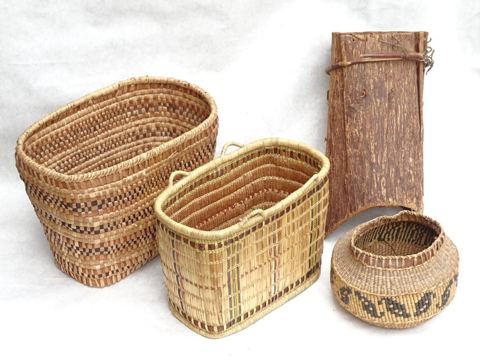
10Four Northwest Coast baskets incl. two tagged QuileuteMedium$200–$500$325pending
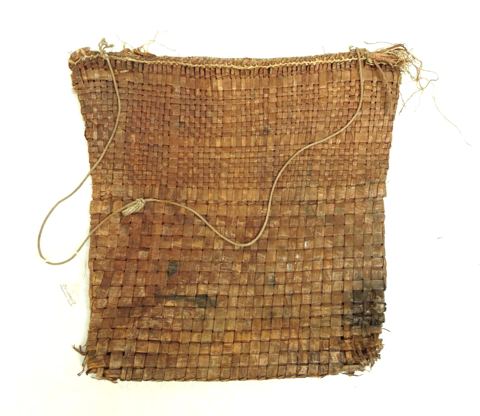
11Quinault plaited cedar-bark carrying bagLow$60–$200$110pending
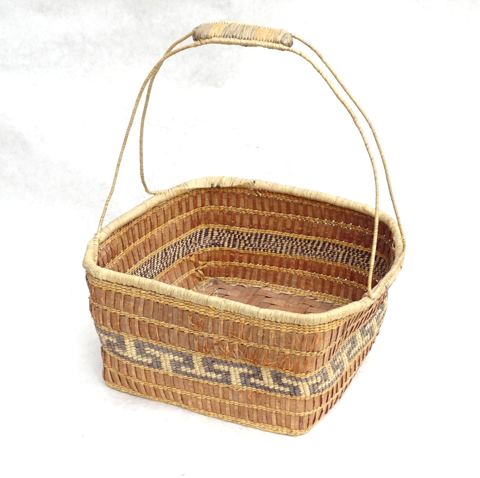
12Makah/Quileute twined cedar-bark handled basketMedium$100–$250$160pending
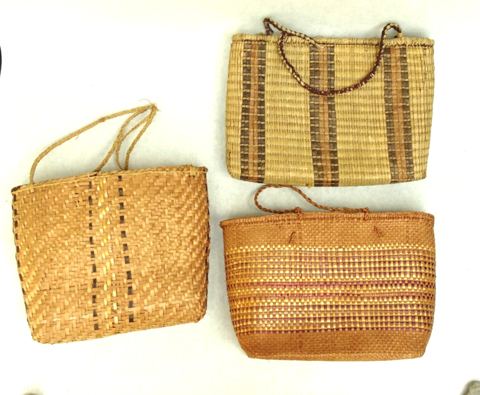
13Three Northwest Coast cedar-bark and grass handbagsMedium$90–$250$150pending
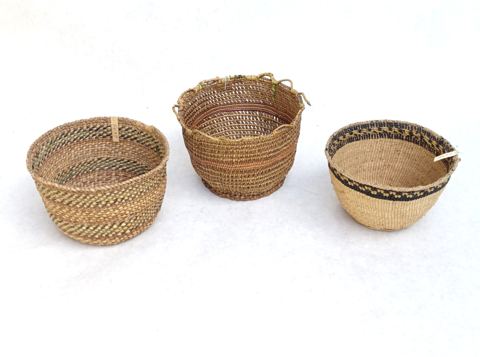
14Three small Quinault-type twined basketsMedium$100–$275$175pending
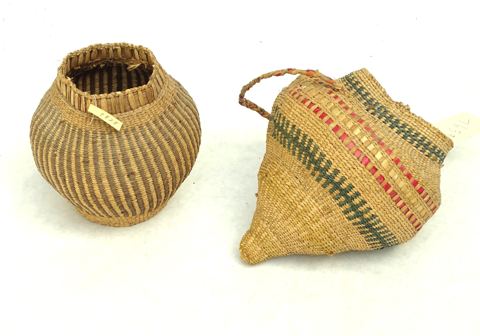
15Two Olympic Peninsula twined baskets (jar and 'top' form)Medium$80–$225$140pending
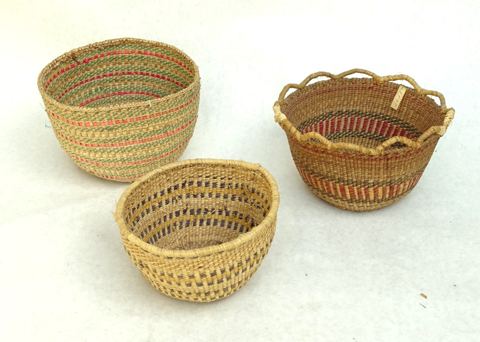
16Three Quinault twined bowlsMedium$90–$250$160pending
17Klamath twined tule bowlMedium$60–$180$110pending
Alaska Basketry$1,040
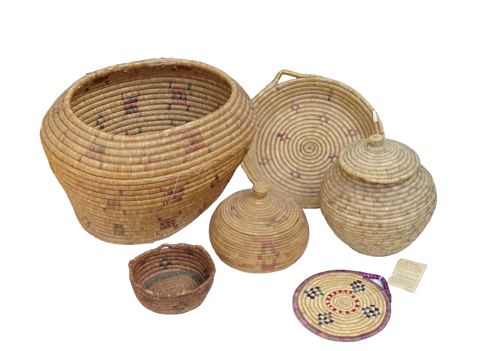
18Six Alaska coiled grass basketsMedium$180–$450$300pending
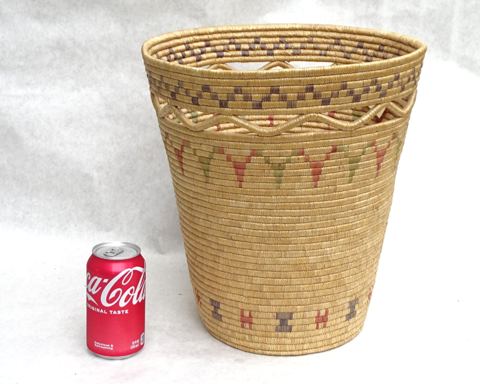
19Large Yup'ik coiled grass basket with openwork bandMedium$200–$475$325pending
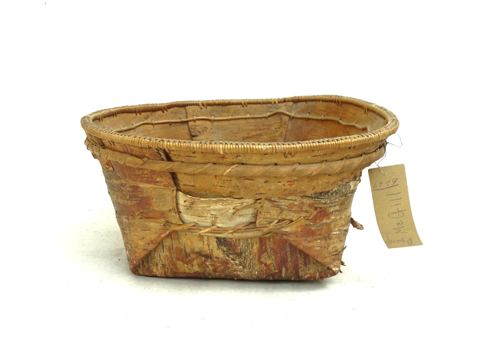
20Athabaskan birch-bark basket with fern-patterned rimMedium$75–$225$140pending
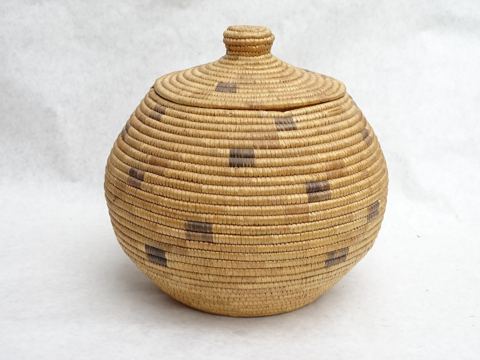
21Large Yup'ik coiled grass lidded basketMedium$175–$425$275pending
Other Basketry$570
22Three Tohono O'odham / Pima coiled basketsMedium$120–$320$200pending
23Box lot of mixed baskets, bag, carving and souvenirsLow$175–$500$300pending
24Three Great Lakes sweetgrass and birch-bark traysMedium$40–$120$70pending
Trade Beads — Venetian$920
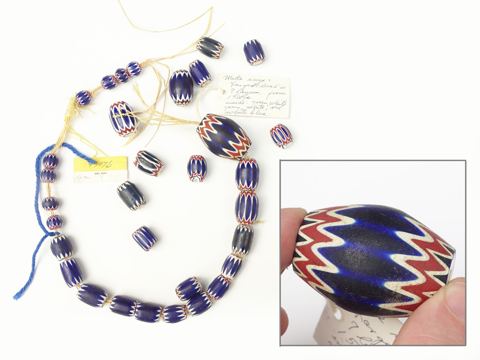
25Venetian 6-layer chevron bead strand with large chevron and loose beadsMedium$275–$750$450pending
26Cornaline d'Aleppo yellow-heart and white-heart bead strandMedium$50–$140$85pending
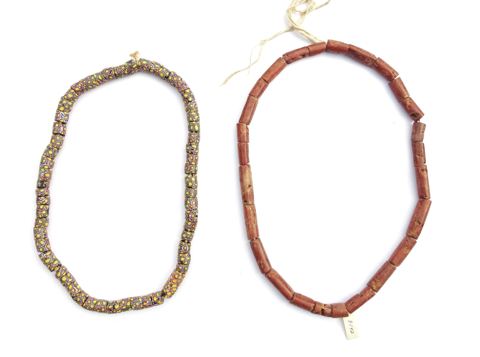
27Venetian millefiori strand and red stone tube bead strandLow$45–$140$80pending
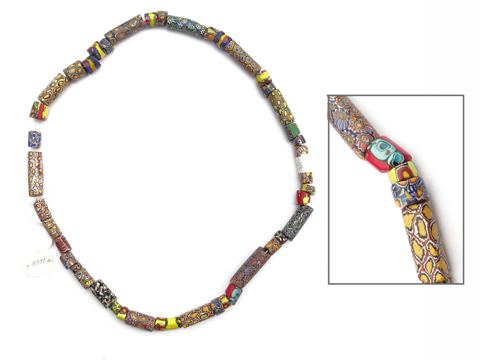
28Venetian millefiori trade bead strandMedium$45–$120$75pending
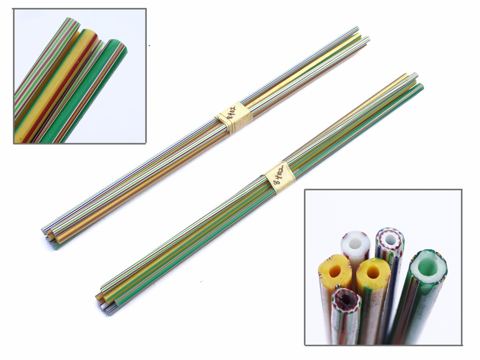
29Twelve Venetian striped glass bead cane rodsLow$25–$90$50pending
30Venetian millefiori trade bead strandMedium$60–$150$95pending
31White 'padre' glass trade bead necklaceMedium$18–$55$30pending
32Micro chevron Venetian trade bead strandMedium$30–$90$55pending
Trade Beads — Bohemian & Dutch$550
33Wound cobalt and clear glass trade bead strandMedium$35–$110$65pending
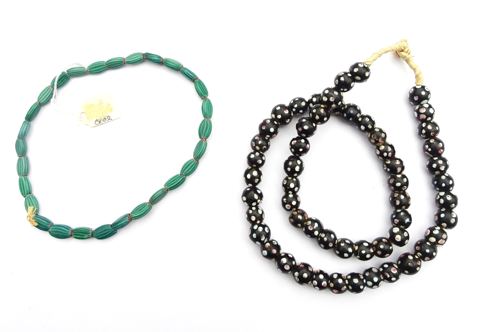
34Two strands: green melon 'watermelon' beads and black skunk beadsLow$45–$130$80pending
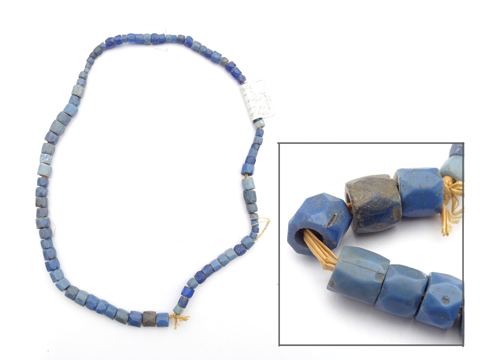
35Russian blue faceted glass trade bead strandMedium$90–$220$140pending
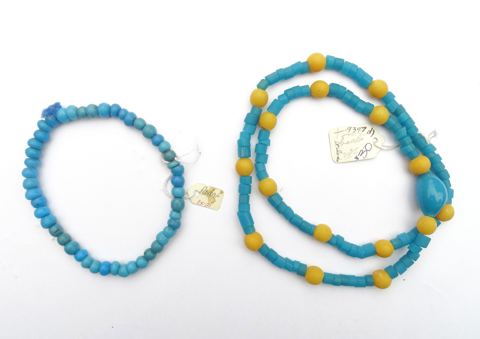
36Two strands — blue padre beads and turquoise/yellow trade beadsMedium$25–$75$45pending
37Black and brown wound glass trade bead strandLow$25–$80$45pending
38Padre bead tassel necklace and cobalt disc bead strandLow$25–$75$45pending
39Blue drawn-glass tube trade bead necklaceMedium$20–$60$35pending
40Large black wound glass trade bead necklaceLow$35–$110$60pending
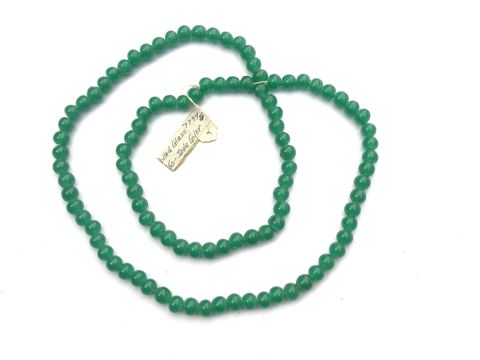
41Jade-green rolled glass bead necklaceMedium$20–$60$35pending
Trade Beads — Other$350
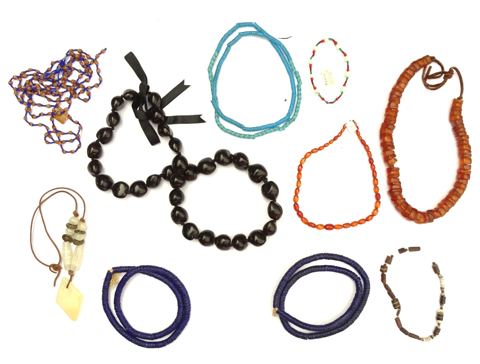
42Box lot of 11 mixed bead necklaces (snake beads, amber-color, kukui, etc.)Low$50–$200$95pending
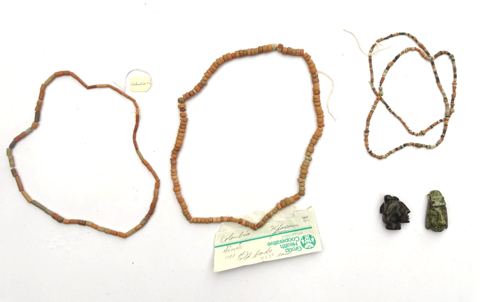
43Three Sinú-type pottery bead strands with two carved stone face pendantsLow$45–$160$90pending
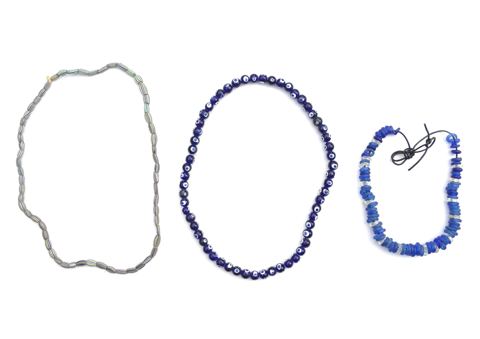
44Three glass bead strands — striped, eye and recycled blueMedium$20–$60$35pending
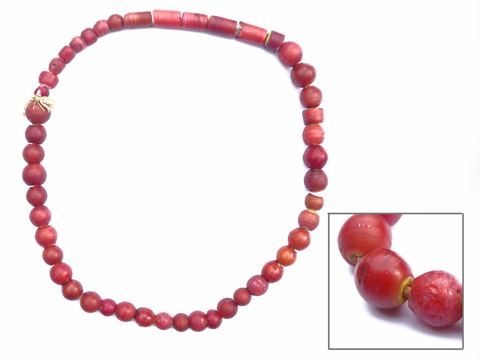
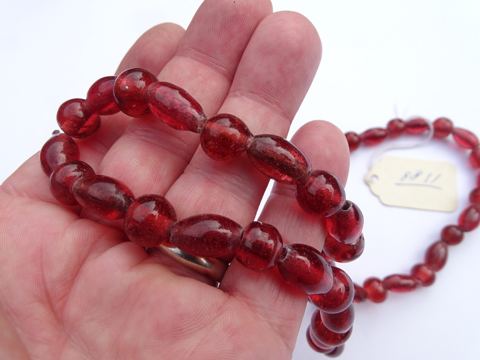
45Chinese 'Peking' cranberry-red glass bead necklaceMedium$35–$90$55pending
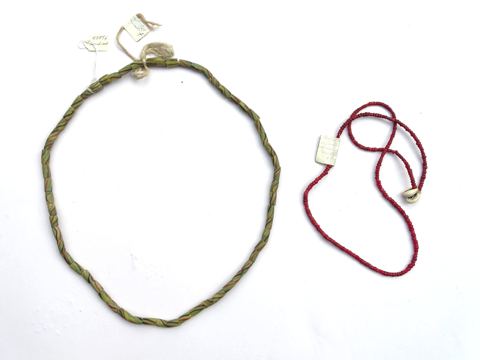
46Two trade bead strands: striped powder-glass tubes and red white-heartsMedium$20–$60$35pending
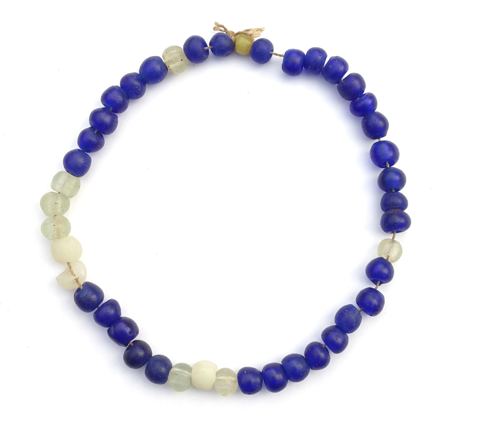
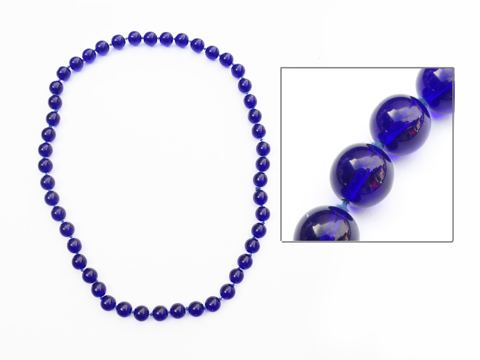
47Cobalt blue round glass bead necklaceMedium$25–$70$40pending
Amber & Resin$305
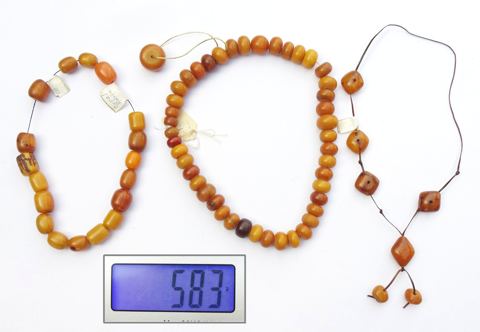
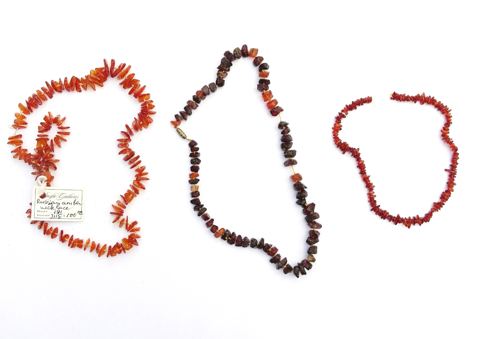
48Three phenolic resin 'African amber' bead necklaces, 583 gMedium$140–$350$220pending
49Three vintage amber chip necklacesMedium$50–$150$85pending
Textiles & Rugs$1,330
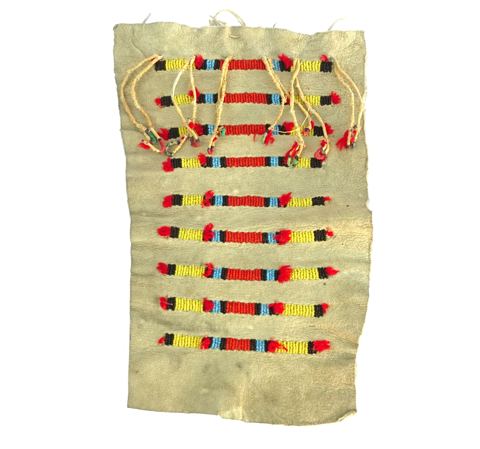
50Beaded hide panel with wrapped fringeLow$90–$325$175pending
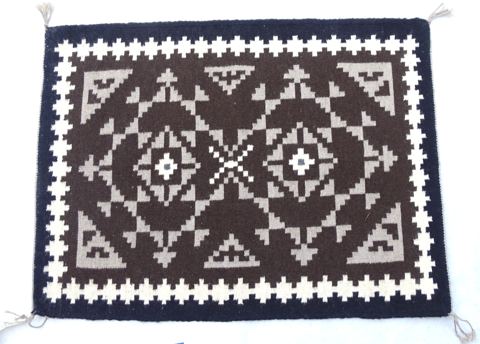
51Navajo Two Grey Hills rug by Elouise Brown, 23 x 31 in.Medium$275–$750$450pending
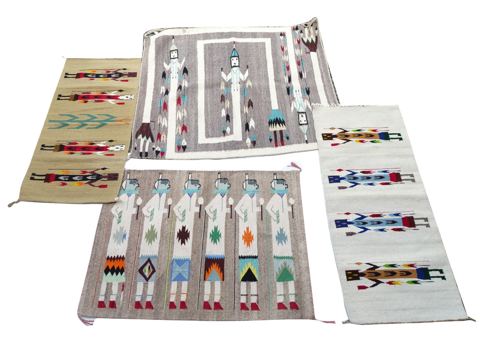
52Four Yei / Yeibichai pictorial rugs (Navajo and Navajo-style)Low$350–$1,000$600pending
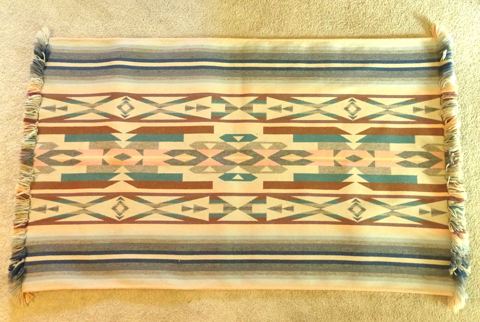
53Southwest-pattern jacquard wool-blend throwMedium$25–$75$45pending
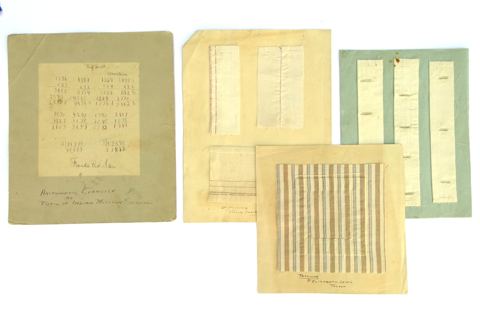
54Indian mission school sewing samplers and arithmetic exercise (4 boards)Low$30–$140$60pending
Pottery$180
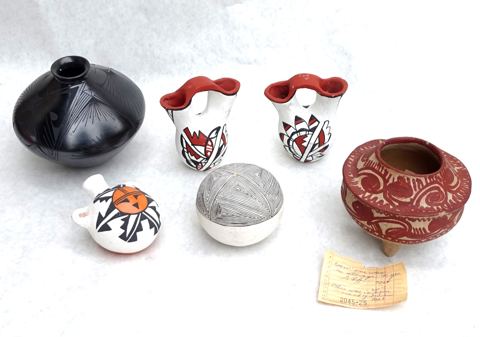
55Six pieces of Southwest and Mexican pottery (Acoma, Mata Ortiz and others)Medium$110–$300$180pending
Carving$1,200
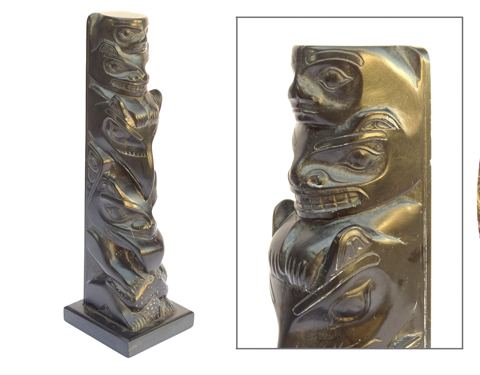
56Haida argillite model totem pole, signed Claude Davidson, 1972Medium$700–$2,200$1,200pending
Silver & Metalwork$485
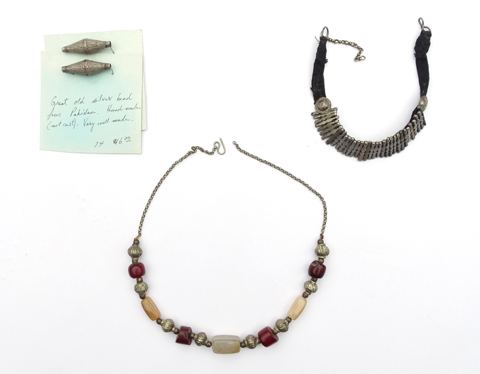
57Pakistan/Afghan white-metal jewelry lotLow$30–$95$55pending
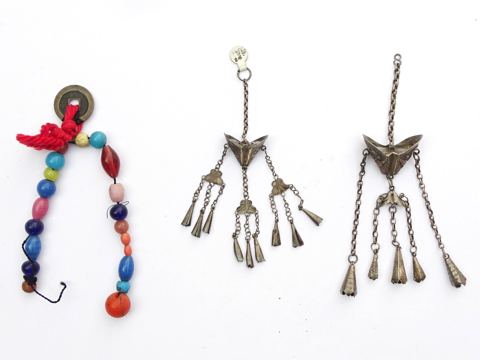
58Two Chinese silver chatelaine pendants and a bead-and-coin charm stringLow$55–$160$90pending
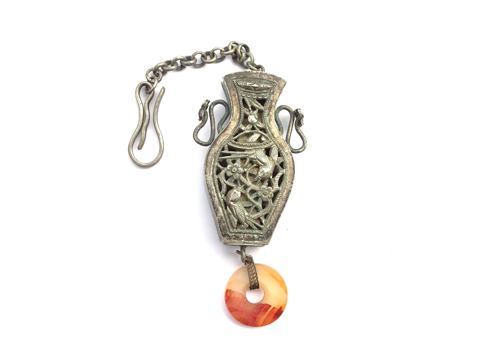
59Chinese silver vase-form needle case pendant with agate discMedium$80–$225$130pending
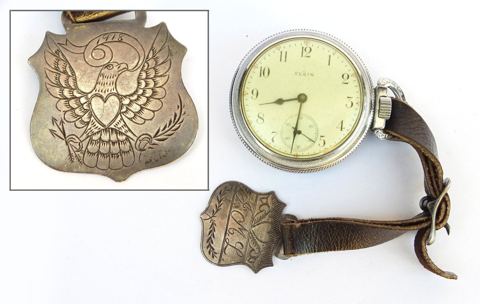
60Elgin open-face pocket watch with engraved silver eagle fob (1918)Medium$80–$250$140pending
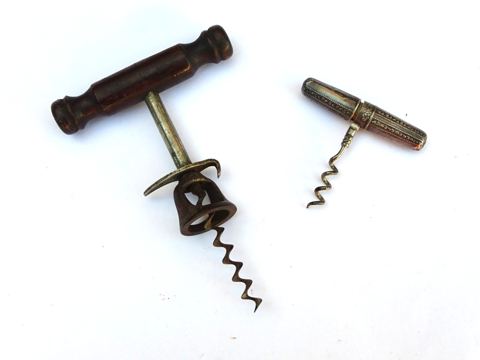
61Williamson's bell corkscrew with foil cutter and embossed pocket corkscrewMedium$35–$140$70pending
Art & Ephemera$235
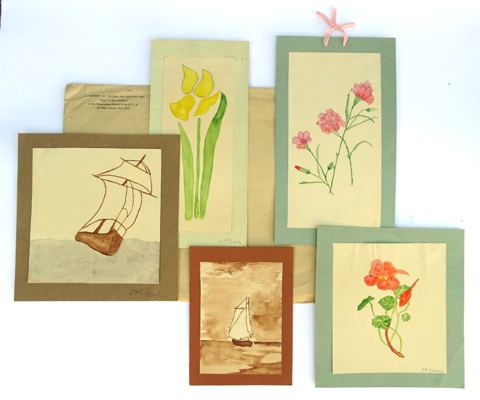
62Five mission-school student watercolors with Presbyterian Home Missions mailerLow$20–$90$40pending
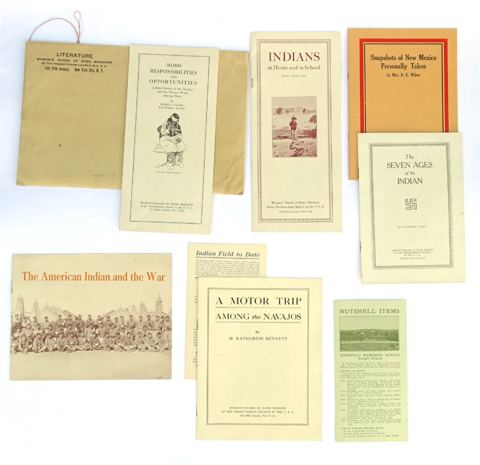
63Presbyterian Woman's Board of Home Missions Southwest Indian mission pamphlets (8) with mailerMedium$30–$110$55pending
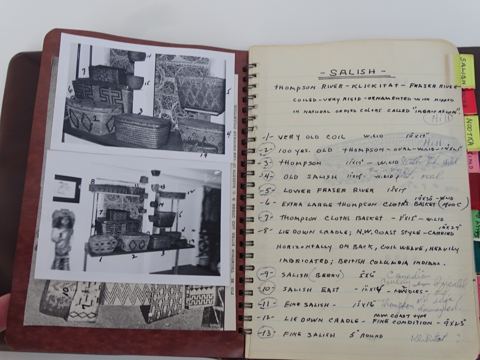
64Paterson collection 'Indian Basketry' photo-inventory scrapbookLow$35–$175$75pending
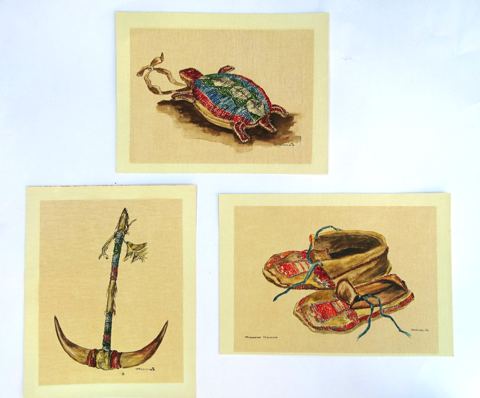
65Three B. Tietjen Native artifact prints (turtle amulet, horn headdress, Blackfoot moccasins)Medium$10–$45$20pending
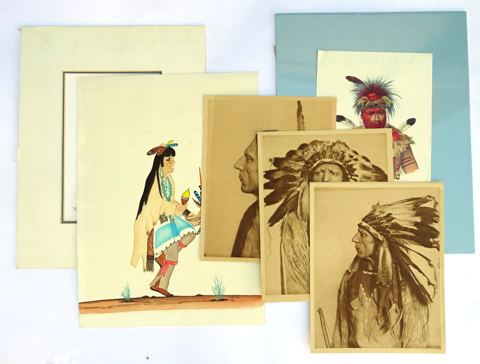
66Lot of 7 Native American-themed artworks and prints incl. Morrisseau art cardLow$25–$110$45pending
Other$45
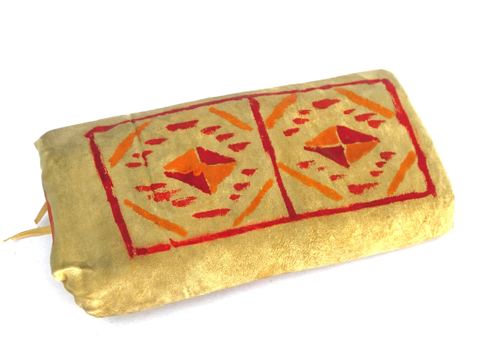
67Painted suede envelope wallet in parfleche styleLow$20–$90$45pending
Total$6,608–$18,695$11,155

Klickitat & Plateau Basketry 4 listings · $840

No. 1Medium confidence

Two worn Plateau coiled cedar-root utility baskets

Seller's title“19th C. Antique Klikitat Native American Indian Northwest Coast Baskets - MG307” eBay ↗

Our estimate$250range $150 – $400

ResultAuction pending

Two heavily used coiled cedar-root baskets, one with a braided cloth carrying strap and remnant red imbrication, the other with scattered cherry-bark beading.

Both are coiled cedar root with tapered bucket forms typical of Plateau/Klickitat berry and utility baskets. Most of the imbrication on the larger basket has worn away, leaving only traces of red and pale grass, and it carries a braided fabric and hide tumpline with an old '7819' paper tag. The smaller basket has bark-beaded spot decoration and small twig repairs at the rim. Both show long hard use and could plausibly date to the late 19th or early 20th century.

Attribution
Plateau — Klickitat or neighbouring Columbia River / Cowlitz (medium)
Era
c. 1880-1920
Materials
split cedar root coiling, cherry bark and grass imbrication remnants, braided cloth and hide strap
Objects
2

Does the title hold up?

Coiled cedar root with imbrication remnants fits Klickitat/Plateau. The '19th C.' claim is plausible given the wear but cannot be proven, and the lot contains two baskets as titled.

Condition

Heavy wear on both. Most of the imbrication on the large basket is lost or abraded, with surface fiber loss and interior grime. The small basket has a worn, darkened surface, stitch loss near the base and old stick/twig repairs at the rim. Both are structurally intact as far as the photos show.

Pricing basis

A Klickitat imbricated berry basket with braided rim sold for $327 with premium (2020), and a pair of imbricated burden baskets made $1,400 (2012). These two are far more worn and have lost most of their decoration, so they price well below that.

Attribution unconfirmed

Klickitat vs. Cowlitz/Salish cannot be settled from photos, and the decoration that would help is mostly worn off.

No. 2Medium confidence

Klickitat-type looped-rim coiled berry basket

Seller's title“19th C. Klickitat Native American Indian Northwest Coast Cedar Basket - MG298” eBay ↗

Our estimate$275range $175 – $450

ResultAuction pending

A coiled cedar-root berry basket with a braided looped rim and worn bear-grass imbrication in a diagonal step design, with old tags reading 'Klikitat' and 'Puyallup Berry Basket'.

This is a classic Plateau/Klickitat berry basket form: a flaring bucket body of coiled split cedar root with a braided rim pulled up into a series of loops, and imbrication in a stepped diagonal pattern. The dark, glossy patina and heavily worn grass imbrication point to genuine use and an early date, probably late 19th to early 20th century. Old tags read 'LC 7677 Klikitat' and 'Puyallup Berry Basket'.

Attribution
Klickitat (per tag) — Plateau / Columbia River; Puyallup collection history (medium)
Era
c. 1880-1915
Materials
split cedar root coiling, bear grass and cherry bark imbrication, braided looped rim
Objects
1

Does the title hold up?

The looped rim and imbricated coiled cedar root support Klickitat, and the tag agrees. '19th C.' is plausible from the wear and patina but unproven, and the second tag ('Puyallup') muddies the tribal attribution.

Condition

Several rim loops are broken or frayed at their ends, and one loop is detached at one side. The imbrication is heavily worn and partly lost, with a darkened, soiled interior and stitch wear at the base. The body is otherwise intact and holds its shape.

Pricing basis

A Klickitat cedar-root berry basket with braided looped rim and imbrication sold for $327 with premium (2020), while a Cowlitz/Klickitat berry basket in better condition made $1,500 (2014). The broken loops and worn imbrication here hold it near the lower comp.

Attribution unconfirmed

The two old tags disagree (Klikitat vs. Puyallup), and Klickitat vs. Cowlitz/Puget Salish looped-rim work cannot be separated reliably from photos.

No. 3Medium confidence

Small Klickitat coiled cedar-root basket with wool strap

Seller's title“19th C. Klikitat Northwest Coast Native American Indian Cedar Baskets - MG304” eBay ↗

Our estimate$225range $125 – $375

ResultAuction pending

Small coiled cedar-root basket with looped rim and remnants of imbrication, tagged 'Klickitat', with an attached purple wool trade-cloth strap.

A small, tapering cylindrical basket coiled from split cedar root, with a braided/looped rim and a few raised loops. Nearly all of the bear-grass imbrication is gone; only short stubs remain across the surface. That loss suggests heavy use, but it also takes away most of the design and much of the value. An old tag reads 'A-1049 Klickitat', and a strip of purple woven wool trade cloth is tied on as a strap. The construction fits late 19th to early 20th century Plateau work.

Attribution
Klickitat (Plateau), per old tag; Salish possible (medium)
Era
c. 1880-1920
Materials
split cedar root coils, bear grass imbrication remnants, wool trade-cloth strap
Objects
1

Does the title hold up?

Title says 'Baskets' (plural), but the photos show a single basket. The coiled cedar-root construction with a looped rim supports Klickitat/Plateau work. A 19th-century date is plausible from the wear but cannot be confirmed.

Condition

Imbrication is almost entirely lost. The rim is broken and frayed in places, with a small rim loss. The interior is dark and soiled. A lining of fiber residue is visible. The strap is frayed. The basket appears structurally intact.

Pricing basis

Klickitat berry baskets in good condition with intact imbrication sell for roughly $300-1,200+, and one cylindrical example sold for about $327. This one is discounted heavily for near-total loss of imbrication and its small size.

Attribution unconfirmed

The tribal attribution depends on an old tag; Klickitat and Salish coiled work cannot be reliably separated from photos.

No. 4Low confidence

Pair of Plateau twined tule/reed fans

Seller's title“Pair Antique Wanapum Salish Native American Indian Baskets - MG308” eBay ↗

Our estimate$90range $50 – $175

ResultAuction pending

Two flat, shield-shaped open-twined tule (reed) fans or sweeping mats with old collection tags.

Each is a flat, pointed-oval utility piece made of bundled tule/reed warps held by widely spaced rows of twining, with a braided selvage and small looped edges. The old tags read '3 - fanning self / Wannipin 7736a' and 'Reed - used for 3 things: 1-sweeping floor, 2-fanning fire'. Collection history adds interest, but these are plain, fragile utility forms that sell for modest prices; they are not decorative baskets.

Attribution
Columbia Plateau (Wanapum per old tag) — Washington (low)
Era
c. 1900-1950
Materials
tule / reed, plant-fiber twining weft
Objects
2

Does the title hold up?

Title says 'Wanapum Salish baskets'. They are twined tule fans or mats rather than baskets. The Wanapum attribution comes only from an old handwritten tag ('Wannipin'), and 'Salish' does not apply to Wanapum, a Sahaptin-speaking Plateau people.

Condition

Both are complete in outline. There are frayed and split reed ends at the tips and edges, scattered spotting and staining, and some loose twining. The material is brittle, as expected. The photos cannot show whether any wefts have broken on the back.

Pricing basis

Category estimate. Plain Plateau tule utility pieces seldom come up for sale and usually bring well under $200 even with old tags.

Attribution unconfirmed

The Wanapum attribution rests only on an old collector tag. Describe it as 'per tag'.

Salish & Coast Coiled Basketry 2 listings · $850

No. 5Low confidence

Nine mixed Northwest Coast and Plateau baskets

Seller's title“(x9) Antique Salish Northwest Coast Native American Indian Baskets - MG309” eBay ↗

Our estimate$650range $400 – $1,000

ResultAuction pending

A mixed nine-basket lot: a Thompson River imbricated rectangular basket, a coiled imbricated tray, an imbricated trapezoid berry basket with rawhide loops, a cedar-bark checker basket, Quinault and Makah twined pieces, a red-banded twined handled basket, a fine twined bowl and a yarn-twined bag.

The strongest pieces are three coiled cedar-root baskets: a large rectangular footed basket tagged 'Thompson R' with red imbricated stars, a rectangular tray with stepped imbrication, and a trapezoidal berry basket with vertical imbricated stripes and rawhide carrying loops. The rest are twined or plaited: a cedar-bark checkerwork basket, a small tagged Quinault grass basket, a Makah oval basket with a wooden slat base and 'MAKAH' label, a red-striped twined bowl with braided handles, a fine polychrome twined bowl, and a cotton/wool yarn-twined bag with a hide loop. Most date to c. 1900-1940.

Attribution
Interior Salish (Thompson River) and Coast Salish coiled; Quinault, Makah and Southern Coast Salish twined; one Plateau-style yarn-twined bag (medium)
Era
c. 1890-1940
Materials
cedar root coiling with bear grass and cherry bark imbrication, cedar bark, grass/sedge twining, cotton and wool yarn, rawhide
Objects
9

Does the title hold up?

The photos show nine baskets, matching '(x9)', and the coiled pieces support Salish/Thompson River. Several pieces are Quinault, Makah or other twined work rather than Salish, and 'Antique' fits most but not all of them.

Condition

The berry basket has two rim splits/breaks and an old repair. The tray has a corner break. The Quinault basket has a degraded, fraying rim and surface fiber loss. The red-striped handled basket has a burned or broken hole in the base. The yarn bag has loose interior yarn ends and some staining. The Thompson River basket and Makah piece look sound but soiled. Overall the lot is mixed, with notable damage on at least four pieces.

Pricing basis

Rectangular Interior Salish imbricated baskets sell for about $250-500 (Maynards CA$312; Bonhams Salish imbricated $256), worn imbricated berry baskets for $150-350, and small damaged twined pieces for $30-100 each. The sum, discounted for damage and lot format, gives the range.

Attribution unconfirmed

This lot mixes several tribal traditions under a single 'Salish' title. Individual attributions rest partly on old tags and cannot all be confirmed from photos.

No. 6Medium confidence

Two Interior Salish imbricated coiled baskets (goblet and lidded)

Seller's title“(x2) Antique Salish Northwest Coast Native American Indian Basket NWC - MG315” eBay ↗

Our estimate$200range $120 – $325

ResultAuction pending

A coiled cedar-root pedestal 'goblet' basket with a looped rim, and a lidded round coiled basket tagged 'Chilcotin', both with imbricated designs.

Both are coiled cedar root with imbrication in natural and dyed bark and grass. The goblet has a looped rim and red and green floral motifs. The lidded bowl has red and black blocks, with a lid that is checkered all over. Tags read 'Bob McGill 6455 Salish' and 'Coiled basket imbricated CHILCOTIN Canada'. The goblet is a souvenir 'fancy' form of the early 20th century. Chilcotin and Fraser River imbricated work sells steadily but modestly when it has condition issues.

Attribution
Interior Salish / Chilcotin (Tsilhqot'in) — British Columbia (medium)
Era
c. 1910-1940
Materials
split cedar root coils, bear grass, cherry bark (imbrication), dyed elements
Objects
2

Does the title hold up?

The coiled, imbricated work fits Salish and Chilcotin attribution and an early-20th-c. date. The title's 'Northwest Coast' is loose: these are Interior BC or Plateau pieces.

Condition

The goblet's foot has been reinforced from underneath with a metal rod or strap wired in place, which suggests an old stem weakness. One rim loop is distorted. Imbrication is faded and partly lost on both baskets. The lidded basket has some broken imbrication at the rim and general surface wear.

Pricing basis

Category estimate from typical sales of small Salish and Chilcotin imbricated baskets ($100-250 each with wear). The goblet's repair holds it down.

Twined & Woven Basketry 11 listings · $2,255

No. 7Medium confidence

Three Southern Coast Salish twined bowl baskets

Seller's title“(x3) Antique Chehalis Northwest Coast Native American Indian Baskets - MG299” eBay ↗

Our estimate$450range $300 – $700

ResultAuction pending

Three open twined bowl baskets with dyed-grass bands and zigzags, each with old handwritten collection tags reading 'Chehalis'.

All three are twined, not coiled: plain/wrapped twining in light grass (one tag says cattail) over a darker warp, with bands in dyed red, green, purple and black grass, and braided rims. The bases start with a twined or checker center. Old numbered collection tags (8714, 9073 and one reading 'Skokomish' crossed out to 'Chehalis') point to an early collection. Southern Puget Sound/Chehalis twined bowls in this style mostly date to c. 1900-1930 and are sought less than Klickitat or Makah work.

Attribution
Southern Coast Salish (Chehalis per old tags; Skokomish/Quinault-area twining possible) (medium)
Era
c. 1900-1935
Materials
grass/cattail weft over cedar-bark or grass warp, aniline-dyed grass decoration, braided rim
Objects
3

Does the title hold up?

The photos support three twined Northwest Coast baskets, and the old tags support a Chehalis attribution. 'Antique' fits a c. 1900-1930 date.

Condition

Generally sound with good colour. The black-and-tan bowl has a slightly misshapen, flattened rim and some interior soiling. The red/green bowl is bright with minor fiber wear. No holes or rim losses are visible, but the bases are only partly shown.

Pricing basis

Comparable early-20th-c. Quinault/Southern Salish twined bowls sell for about $80-300 each on eBay and at regional auctions (e.g. a 1940s Quinault twined bowl hammered at $80). Three good-condition bowls with old collection tags should land in the mid hundreds.

Attribution unconfirmed

The tribal attribution rests on old collector tags, and one of those was revised from Skokomish to Chehalis. Southern Salish twined work is hard to assign to one tribe from photos alone.

No. 8Medium confidence

Two Washington coast twined bowl baskets

Seller's title“(x2) Chehalis Northwest Coast Native American Indian Twined Baskets - MG303” eBay ↗

Our estimate$250range $150 – $400

ResultAuction pending

Two twined footed bowl baskets, one tagged 'Quinault' in red/green/black, the other a paler grass bowl with a stepped black-green band and an old 'Chehalis' tag.

Both are tightly twined with braided rims and slightly raised bases. The larger bowl, tagged Quinault, has dyed red, green and black bands with a stepped outline, a classic Quinault/Queets twined format of c. 1900-1930. The smaller bowl is lighter grass twining with green-black stepped motifs and a coarser coiled-looking center. Both are the bread-and-butter Southern Coast Salish/Quinault twined baskets of the early 20th century.

Attribution
Quinault (tagged) and Chehalis/Southern Coast Salish (tagged) (medium)
Era
c. 1900-1935
Materials
spruce-root or cedar-bark warp, grass/sedge weft, dyed grass decoration
Objects
2

Does the title hold up?

The photos show two twined Northwest Coast baskets, consistent with the title. The tags say Quinault and Chehalis, so 'Chehalis' fits only one of them.

Condition

The Quinault bowl has a small break and loose strands at one point on the rim but is otherwise sound with good colour. The smaller bowl has a loose rim strand, some interior fiber breaks and wear, and a slight shape distortion.

Pricing basis

Early-20th-c. Quinault twined bowls typically sell for about $80-300 each, depending on size and condition (e.g. a 1940s Quinault bowl at $80 hammer, and dealers asking $495-670 for better c. 1910-1920 examples).

Attribution unconfirmed

The attributions rest on old collector tags, and Quinault and Southern Salish twined work overlap closely in style.

No. 9Medium confidence

Large Nuu-chah-nulth (Nootka) twined storage basket

Seller's title“Antique Nuu-chah-nulth Northwest Coast Native American Indian Basket - MG320” eBay ↗

Our estimate$225range $140 – $350

ResultAuction pending

Large open twined Northwest Coast basket with pale grass stripes and a braided rim, carrying an old collector tag reading 'Nootka'.

A tall, flared, open basket about 10 in. high (judged against a soda can). It is plain-twined in brown cedar-bark/root elements, with spaced bands of pale grass that read as dashed stripes, a twined start at the base and a braided rim. The utilitarian shape and coarse gauge suggest an early-to-mid 20th-century work basket, not a fine pictorial trinket basket. Large plain Nuu-chah-nulth/Makah utility baskets sell well below the decorated trinket and lidded forms.

Attribution
Nuu-chah-nulth (Nootka), West Coast Vancouver Island (per old tag); Makah possible (medium)
Era
c. 1910-1950
Materials
cedar bark / root twining, natural bear grass or sedge stripes
Objects
1

Does the title hold up?

The 'Nootka' tag and the twined technique support a Northwest Coast twined attribution. 'Antique' is plausible but not proven; the form and gauge fit the early-to-mid 20th century.

Condition

There is a horizontal split, a separation of several weft rows just below the rim, in photo -07. Otherwise the rim and body look sound, with an even warm patina. No interior staining is visible. Small fiber breaks are likely but cannot be judged from the photos.

Pricing basis

Plain Nuu-chah-nulth/Makah and coastal twined utility baskets usually trade in the low hundreds; fine pictorial or lidded examples bring much more. This is a category estimate, adjusted down for the rim split.

Attribution unconfirmed

The Nootka attribution rests only on an old collector tag. Coastal twined work (Nuu-chah-nulth, Makah, Quileute) is hard to separate from photos.

No. 10Medium confidence

Four Northwest Coast baskets incl. two tagged Quileute

Seller's title“(x4) Antique Northwest Coast Native American Indian Basket Collection - MG317” eBay ↗

Our estimate$325range $200 – $500

ResultAuction pending

Four Pacific Northwest baskets: two Quileute baskets with 1964 collector tags, a twined globular basket with a figural band tagged 'Salish', and a folded cedar-bark carrying basket.

There are two oval Quileute baskets, both tagged '6-6-64, 60-year-old Indian basket, Quillayute tribe', which places them around 1900-1910. One is wrapped-twine/checker work in natural and dyed bark; the other is a handled basket of wrapped-twine over cedar-bark splints with dyed stripes and a plaited cedar-bark base. The third is a globular twined basket with a dark band of animal or bird figures and an open cedar-bark rim collar. It is tagged 'Salish' but is stylistically closer to Makah/Quileute/Quinault coastal twining. The fourth is a large folded and stitched cedar-bark carrying basket with a bent-wood handle hoop, rustic and utilitarian. The figural twined basket is the best piece in the lot.

Attribution
Quileute (two, per tags); coastal Washington twined (Quinault/Makah/Quileute, tagged Salish); Northwest Coast cedar-bark carrier (medium)
Era
c. 1900-1940
Materials
cedar bark, bear grass, dyed grass/bark, spruce or cedar root, bent wood
Objects
4

Does the title hold up?

The count of four is confirmed. 'Antique' fits the 1964 tags (c. 1904) for the Quileute pieces; the other two are plausibly early-to-mid 20th century.

Condition

The woven baskets look generally sound with light surface wear and some fraying. The figural basket shows a slight rim distortion. The cedar-bark carrier has splits, frayed edges and a separated lower seam (photo -14).

Pricing basis

Comparable Quinault and Quileute baskets have been listed on eBay at roughly $95-360 each. Lots of utilitarian coastal baskets usually sell well under the sum of retail, so the estimate is set conservatively.

Attribution unconfirmed

Attributions come from collector tags; one tag ('Salish') looks inconsistent with the twined coastal style.

No. 11Low confidence

Quinault plaited cedar-bark carrying bag

Seller's title“19th C. Quinault Northwest Coast Native American Indian Cedar Basket - MG302” eBay ↗

Our estimate$110range $60 – $200

ResultAuction pending

Flat checker-plaited cedar-bark bag/basket with a twined rim and later cord strap, tagged 'Quinault ... cedar bark'.

A soft, flat, rectangular container in checker-plaited inner cedar bark, about 16-18 in. square by eye. The rim is finished with a twined grass/bark row, and a modern twisted cord strap has been added. Plaited cedar-bark bags of this kind were everyday utility pieces on the Washington coast. They show honest age but are not decorative, and that limits their market.

Attribution
Quinault, Washington coast (per tag) (medium)
Era
c. 1890-1930
Materials
plaited inner cedar bark, grass twining, later cotton/synthetic cord
Objects
1

Does the title hold up?

The tag and plaited cedar-bark technique support a Quinault/coastal attribution. '19th C.' is possible given the wear, but plaited bark bags were made well into the 20th century.

Condition

One lower corner has broken, frayed and dark-stained bark. The upper corners and rim are frayed with loose fibers. There are scattered dark stains and a small hole near the center. The strap is a later replacement.

Pricing basis

Antique Quinault twined baskets have been listed at $175-360. A worn, undecorated plaited bark bag sits below that, so this is a category estimate.

Attribution unconfirmed

The Quinault attribution rests on a collector tag; plaited cedar bark was made by many coastal peoples.

No. 12Medium confidence

Makah/Quileute twined cedar-bark handled basket

Seller's title“Antique Makah Quileute Northwest Coast Native American Indian Basket - MG318” eBay ↗

Our estimate$160range $100 – $250

ResultAuction pending

Square handled market basket in grass wrapped-twining over cedar-bark splints with a gray-and-cream fret band and plaited cedar-bark base.

The basket is built on a plaited cedar-bark base. Its sides are cedar-bark splints held by spaced rows of grass twining, with a wrapped-twine band of gray (dyed) and natural grass forming a stepped scroll/fret. The rim is wrapped in grass, and a tall double handle has a wrapped grip. This is the classic Makah/Quileute (La Push / Neah Bay) market-basket construction of the early-to-mid 20th century. A family sympathy letter came with it but has no bearing on the basket.

Attribution
Makah or Quileute, Olympic Peninsula, Washington (medium)
Era
c. 1920-1960
Materials
cedar bark splints and plaiting, bear grass/sedge twining, dyed grass
Objects
1

Does the title hold up?

The construction matches Makah/Quileute market baskets. 'Antique' is generous; it is most likely mid-20th century.

Condition

Good overall. The cedar-bark splints are frayed and fuzzy on one side (photos -02, -07), there are small dark spots on the rim wrap, and the handle wrap is slightly loose. The base is sound.

Pricing basis

Comparable Quileute/Makah cedar-bark utility baskets are listed at roughly $95-250 on eBay and Etsy, so this is a category estimate.

Attribution unconfirmed

There is no tag; Makah vs. Quileute (and Quinault) cannot be separated from photos.

No. 13Medium confidence

Three Northwest Coast cedar-bark and grass handbags

Seller's title“(x3) Salish Quinault Northwest Coast Native American Indian Cedar Basket - MG301” eBay ↗

Our estimate$150range $90 – $250

ResultAuction pending

Three woven bags with handles: a twill-plaited cedar-bark bag, a checker-plaited cedar-bark bag with dyed stripes, and a twined grass bag tagged 'Quileute'.

Two bags are plaited from cedar bark. One is twill-plaited with dark-dyed accent strips. The other is checker-plaited with purple and yellow banding and a braided handle. The third is a twined grass-over-cedar-bark bag with brown and red vertical stripes, braided handles, and an old 'Quileute' tag. Bags like these were made for sale on the Washington coast and Olympic Peninsula in the mid-20th century. They are utilitarian and sell modestly.

Attribution
Olympic Peninsula — Quileute / Quinault (tag on one) (medium)
Era
c. 1930-1960
Materials
western red cedar bark, grass, aniline dyes, braided handles
Objects
3

Does the title hold up?

Count of 3 is confirmed. The pieces are plaited and twined, which fits Quinault or Quileute work. 'Salish' is a broad label but not wrong for the area, and the tag on one reads Quileute.

Condition

All three are structurally sound and hold their shape. Expect light soiling and some bark-strip wear at the corners and bases. The twined bag's braided handles are frayed and show some color loss.

Pricing basis

Mid-century Quinault and Olympic Peninsula twined and plaited pieces usually sell for about $80-200 each at auction (e.g. a 1940s Quinault twined basket sold for $80). Lots of plain cedar bags run lower per piece.

No. 14Medium confidence

Three small Quinault-type twined baskets

Seller's title“(x3) Antique Quinault Northwest Coast Native American Indian Baskets - MG311” eBay ↗

Our estimate$175range $100 – $275

ResultAuction pending

Three small twined bowls: one in natural and green spiral twining, one in openwork with a looped rim, and one cream bowl with a black-and-yellow band tagged 'Quinault'.

All three are wrapped or plain twined in grass, sedge and cedar bark, with dyed accents. One has a twined spiral of black and green. One is openwork with a raised looped rim and a red band. The third is a fine cream bowl with a black and yellow zigzag rim band and a braided rim. Old tags read '6439' and 'Quinault'. These are typical Olympic Peninsula sale baskets from the early to mid-20th century.

Attribution
Quinault / Olympic Peninsula — Washington (medium)
Era
c. 1910-1950
Materials
grass/sedge, cedar bark, dyed elements
Objects
3

Does the title hold up?

Count of 3 is confirmed. The twined construction fits the Quinault attribution. 'Antique' is plausible for one or two; the cream bowl could be mid-century.

Condition

The spiral-twined bowl has frayed and broken spots at the rim and in its interior wall. The openwork bowl has a slightly irregular rim with green wrapping on the loops. The cream bowl looks sound with only minor fraying. Light soiling overall.

Pricing basis

Small Quinault twined baskets sell from about $80 (1940s example) to several hundred for fine early ones. Three small baskets with some wear, sold as a lot, are best placed near the low end per piece.

No. 15Medium confidence

Two Olympic Peninsula twined baskets (jar and 'top' form)

Seller's title“(x2) Antique Quinault Native American Indian Ornament Baskets - MG306” eBay ↗

Our estimate$140range $80 – $225

ResultAuction pending

A twined grass jar with vertical brown stripes and a cedar-bark collar, and a spinning-top-shaped hanging basket with green, red and natural bands, tagged 'Quileute'.

The jar is twined in natural and dark grass with vertical stripes and has a wrapped cedar-bark rim collar. It carries tag 7828. The second is an unusual double-cone 'ornamental' form with a braided handle, twined in grass with green bands and red-dyed bark overlay strips. Its old tag reads 'Ornamental basket, unknown tribe, unique shape, Quileute'. Both are typical Washington-coast sale baskets from the early to mid-20th century.

Attribution
Quileute / Quinault — Olympic Peninsula, Washington (medium)
Era
c. 1910-1950
Materials
grass/sedge, cedar bark, dyed elements, braided handle
Objects
2

Does the title hold up?

Count of 2 is confirmed. The twined work fits Quinault or Quileute, and the tag on one says Quileute. Nothing in the photos confirms 'antique' beyond early-to-mid 20th century.

Condition

Both are complete and hold their shape. There is some fiber fraying and loose ends, light soiling, and minor fading on the 'top' form. The handle is intact but worn.

Pricing basis

Small Quinault and Quileute twined baskets usually sell for $80-200 each. The unusual top form could draw an extra bid.

No. 16Medium confidence

Three Quinault twined bowls

Seller's title“(x3) Antique Salish Northwest Coast Native American Indian Baskets - MG310” eBay ↗

Our estimate$160range $90 – $250

ResultAuction pending

Three small twined grass bowls with dyed bands: green and pink, red and green with a looped rim, and natural with dark dashes, tagged 'Quinault'.

All three are plain or wrapped twined grass and sedge with dyed bands and overlay. One has green bands and a pink bark-strip overlay. One is red, green and natural with a wrapped, scalloped looped rim, tagged 6437 and 'Quinault'. The third is natural with dark dashes and a wrapped rim, tagged '6929 Quinalt'. These are Olympic Peninsula sale baskets from the early to mid-20th century.

Attribution
Quinault — Olympic Peninsula, Washington (medium)
Era
c. 1920-1950
Materials
grass/sedge, cedar bark, aniline-dyed elements
Objects
3

Does the title hold up?

Count of 3 is confirmed. These are twined, not coiled Salish baskets, and are better described as Quinault, as the tags say. Quinault are linguistically Salishan, so 'Salish' is loosely defensible.

Condition

Generally sound. The pink and green bowl has some broken wefts and fraying at the rim. The looped rim shows wear and unwrapping at the joins. Light soiling and fading throughout.

Pricing basis

Small Quinault twined baskets bring about $80-200 each. Lots of three bright aniline-dyed bowls usually sell at the lower end per piece.

No. 17Medium confidence

Klamath twined tule bowl

Seller's title“c.1900 Klamath Modoc Native American Indian Basket Northern California - MG316” eBay ↗

Our estimate$110range $60 – $180

ResultAuction pending

A shallow, round twined tule bowl with dark concentric bands, tagged 'Klamath'.

A wide, shallow bowl in close twining of tule or rush, in a natural tan with darker brown banding near the center and below the rim. An old tag reads 'Klamath'. The plain banded design and soft tule construction fit Klamath and Modoc work of the early 20th century. The rim is worn.

Attribution
Klamath / Modoc — southern Oregon / northern California (medium)
Era
c. 1900-1930
Materials
tule / rush, dark-dyed or natural dark tule bands
Objects
1

Does the title hold up?

Twined tule construction supports Klamath or Modoc. A c. 1900 date is plausible but the photos cannot confirm it; c. 1900-1930 is safer.

Condition

The rim is worn and frayed with broken wefts and a slightly uneven edge, and the shape is mildly distorted. Overall darkening and patina. The body and base look intact.

Pricing basis

Comparable Klamath baskets sold for $110 (iCollector, early-mid 1900s) and $200 (Stair Galleries, 2024). This plain banded bowl with rim wear sits at the low end.

Alaska Basketry 4 listings · $1,040

No. 18Medium confidence

Six Alaska coiled grass baskets

Seller's title“(x6) Antique Alaska Inuit Eskimo Native American Indian Basket Collection MG313” eBay ↗

Our estimate$300range $180 – $450

ResultAuction pending

Six Yup'ik-style coiled grass pieces: a large open basket, a handled tray, two lidded jars with knob finials, a small coarse handled bowl and a trivet with an ANAC 'Alaskan Eskimo Grass Basketry' tag.

These are coiled beach/rye grass baskets with dyed-grass or skin-strip spot motifs, typical of Yukon-Kuskokwim/Hooper Bay Yup'ik trade basketry. The ANAC (Alaska Native Arts and Crafts) certificate on the trivet and the aniline colours point to the mid-20th century, roughly 1940-1970, rather than antique. The lidded jars with knob finials are the most saleable pieces, while the small coarse brown bowl is cruder and may be another maker or region.

Attribution
Yup'ik (Central Alaska), with ANAC tag on one piece (medium)
Era
c. 1940-1970
Materials
coiled beach/rye grass, dyed grass and possibly seal-gut or skin decorative strips, grass handles
Objects
6

Does the title hold up?

The photos show six Alaska coiled grass pieces, matching '(x6)'. 'Antique' overstates the age: the ANAC tag and dyes indicate mid-20th-century work.

Condition

The large open basket has fraying foundation grass at the rim and a long split or loose coil on one side. The lidded jars are sound with some soiling and a loose rim strand. The tray handle is intact. The small brown bowl is worn and darkened. The trivet's colours are bright.

Pricing basis

Single mid-century Yup'ik coiled baskets sell for about $50-300 at auction (e.g. estimates of $150-300, one realised $275), and eBay collection lots commonly fall in the $300-400 range.

Restricted animal material?

Some Yup'ik baskets use seal-gut or skin strips for decoration. These spot motifs look like dyed grass, but marine-mammal material cannot be ruled out from photos (MMPA applies to non-Native sale of raw parts, though authentic Native handicrafts are generally exempt).

No. 19Medium confidence

Large Yup'ik coiled grass basket with openwork band

Seller's title“Antique Alaska Kuskokwin Bay Inuit Yupik Native American Indian Basket - MG319” eBay ↗

Our estimate$325range $200 – $475

ResultAuction pending

Large tapering Yup'ik coiled-grass basket with dyed geometric motifs and a looped openwork zigzag band, tagged 'Kuskokwim Bay, Alaska'.

A wastebasket-size (about 12-13 in. tall) coiled basket in fine wild rye/beach grass. It is decorated with dyed mauve, red and green checker bands, a row of 'Y' motifs and 'H' motifs near the base, and a raised open zigzag coil band below the rim. The tag reads 'Kuskokwim Bay, Alaska, coiled, natural dye, looped coil'. Stitching is even and tight, and the dyes look like commercial or faded aniline colors, which fits mid-20th-century Yup'ik production. Large Yup'ik baskets are steadily collectible.

Attribution
Yup'ik, Kuskokwim region, Alaska (high)
Era
c. 1940-1970
Materials
coiled beach/rye grass, dyed grass stitching
Objects
1

Does the title hold up?

Coiled grass technique and motifs match Yup'ik work and the old tag. 'Antique' is a stretch; it is more likely mid-20th century. 'Inuit' is a loose term here.

Condition

Appears very good: the coils are intact, the openwork loops are complete, and the dyes are only lightly faded. No breaks or losses are visible.

Pricing basis

Vintage Yup'ik coiled baskets on eBay run about $75-500, with larger polychrome examples at the top. Size and condition put this one in the upper-middle of that range.

No. 20Medium confidence

Athabaskan birch-bark basket with fern-patterned rim

Seller's title“Antique Alaskan Athabaskan Birch Bark Native American Indian Basket - MG305” eBay ↗

Our estimate$140range $75 – $225

ResultAuction pending

Folded birch-bark basket with willow rim hoop and spruce-root lashing, the rim wrap patterned in black maidenhair fern stem, with an old tag 'Alaska – Tinne'.

The basket is made from a single sheet of birch bark folded at the corners. It is reinforced with a bent willow hoop and lashed with split spruce root, with an inner rim band. The rim wrap alternates natural root with black maidenhair fern stem. Two tags read 'Birch Bark Basket, Alaska – Tinne. Black design is made with maiden hair fern' and 'McGill 6449'. 'Tinne' is an old term for Dene/Athabaskan peoples. This is a standard interior Alaska/Yukon form, usually early-to-mid 20th century.

Attribution
Athabaskan (Dene), interior Alaska (high)
Era
c. 1920-1950
Materials
birch bark, spruce root, willow hoop, maidenhair fern stem
Objects
1

Does the title hold up?

Materials, construction and the period tag support an Alaskan Athabaskan birch-bark basket. 'Antique' is plausible if read loosely.

Condition

There are bark splits and peeling outer layers at the folded corners, and one corner fold is lifting. Interior water staining and dark spots are present. Some lashing stitches are loose. The rim wrap is intact.

Pricing basis

Athabaskan birch-bark baskets have sold at auction for $65-120, with eBay examples around $25-150. The fern-decorated rim and old tags support the upper part of that range.

No. 21Medium confidence

Large Yup'ik coiled grass lidded basket

Seller's title“Antique Inuit Yupik Alaska Coiled Sea Grass Native American Indian Basket MG321” eBay ↗

Our estimate$275range $175 – $425

ResultAuction pending

A large globular coiled beach-grass basket with a knobbed lid and a pattern of faded dyed blocks, about 10 in. tall.

The basket is coiled in rye or beach grass with even stitching and spaced blocks of dyed grass, faded to grey and brown on the outside. The interior shows the original darker black, brown and red. The fitted lid has a coiled knob. An old paper label on the base reads 'Eskimo ...'. The globular knob-lid form is classic Yukon-Kuskokwim Yup'ik sale work of the mid-20th century. The large size helps value.

Attribution
Yup'ik — Yukon-Kuskokwim region, Alaska (high)
Era
c. 1940-1970
Materials
coiled beach/rye grass, dyed grass (no seal gut or skin visible)
Objects
1

Does the title hold up?

The coiled-grass construction and knob-lid form support Alaska Yup'ik. 'Inuit' is loose usage. 'Antique' is a stretch: this looks mid-20th century.

Condition

Sound and complete with a well-fitting lid. Dyes are faded on the exterior. Stitching shows minor fraying and a few broken stitches near the lid seat. No obvious holes are visible.

Pricing basis

Mid-century Yup'ik coiled grass baskets sell in a wide range: about $150-300 estimates at NAAB for mid-century examples, and $170-450 asking prices for lidded examples. This one's large size puts it in the upper-middle of that range.

Other Basketry 3 listings · $570

No. 22Medium confidence

Three Tohono O'odham / Pima coiled baskets

Seller's title“(x3) Antique Pima Papago Southwest Native American Indian Baskets - MG312” eBay ↗

Our estimate$200range $120 – $320

ResultAuction pending

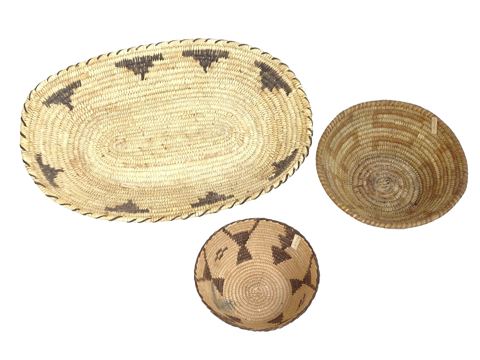
A large oval Tohono O'odham coiled tray with devil's-claw stepped triangles and an overstitched rim, a small Pima/Papago willow and devil's-claw bowl, and a coarser split-stitch Papago bowl.

The oval tray is bundle-coiled in pale yucca over grass with devil's-claw triangles and a whipped devil's-claw rim, a common mid-20th-c. Tohono O'odham trade form. The small bowl is finer close-coiled work in willow with devil's-claw whirling elements, the best of the three, though it has blue staining on the exterior. The third bowl, tagged 'Papago', is coarse split-stitch coiling with faded tan bands, a typical inexpensive c. 1930-1960 piece.

Attribution
Tohono O'odham (Papago); small bowl possibly Pima (medium)
Era
c. 1920-1960
Materials
willow, yucca, bear grass/cattail foundation, devil's claw
Objects
3

Does the title hold up?

The photos support Pima/Papago Southwest coiled baskets and the count of three. 'Antique' fits the small bowl at best; the tray and split-stitch bowl look mid-20th century.

Condition

The oval tray is sound with light soiling. The small bowl has a bluish stain across part of its exterior and a loose fiber inside. The split-stitch bowl has a worn, fraying center start and some soiling. No rim losses are visible.

Pricing basis

Bonhams sold three Tohono O'odham baskets, including an oval handled tray, for $218 with premium, and similar three-basket Papago lots routinely make $100-300.

No. 23Low confidence

Box lot of mixed baskets, bag, carving and souvenirs

Seller's title“BOX LOT! Antique Native American Indian Basket Collection + More - MG314” eBay ↗

Our estimate$300range $175 – $500

ResultAuction pending

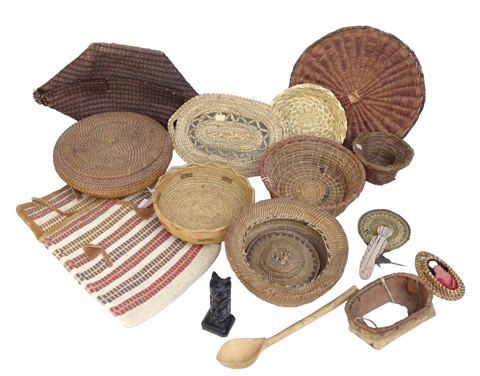
Mixed estate box lot of about 12 baskets and trays of varied origin, plus a striped woven bag, a black totem figure, a wooden spoon and a painted fish ornament.

The lot is very mixed. It has a coastal twined hat-form bowl with a checker-plaited center, a raffia coiled tray tagged 'near Aberdeen, Wash. 1920-30 raffia', and a lidded rattan basket tagged 'Tulalip' that looks like commercial or Asian rattan work. There are also several pine-needle coiled bowls (craft-revival, probably non-Native), an openwork coiled grass tray, a large wicker-style tray and a small twig basket. It also includes a fragmentary plaited cedar-bark basket, a small birch-bark tray with a 1950 British Columbia tag, and a striped twined/woven bag with hide trim, probably a 20th-century Plateau-style or hobby piece. The non-basket items are a black cast or carved totem souvenir, a carved wood spoon, and a small coiled mat with a cut-out fish ornament. The value is in the two or three Native coastal pieces and the volume, not in any single standout object.

Attribution
Mixed: Pacific Northwest coastal (Makah/Quinault area), Washington raffia work, non-Native pine-needle craft, commercial rattan, souvenir items (low)
Era
c. 1920-1970
Materials
cedar bark, grass, raffia, pine needle, rattan, birch bark, wool/cotton, wood, resin or stone
Objects
16

Does the title hold up?

'Antique Native American Indian Basket Collection' overstates the lot. Several pieces are non-Native craft, commercial or souvenir items, and only a few look like older Native coastal work. Photos show about 16 objects.

Condition

Wear varies across pieces. The cedar-bark plaited basket is flattened and frayed at the ends, and the large tray has rim wear and losses. The pine-needle bowls and the bag look sound. The photos are too general to inspect each piece for breaks.

Pricing basis

Mixed estate basket box lots on eBay usually sell at $15-30 per piece, with a premium for one or two better Northwest Coast items. This is a category estimate.

Attribution unconfirmedFeather

Many pieces are probably not Native-made, so describing the whole lot as Native American basketry carries IACA risk. The small fish ornament appears to have a dark feather attached (photo -01); the species cannot be identified, so a possible MBTA concern exists.

No. 24Medium confidence

Three Great Lakes sweetgrass and birch-bark trays

Seller's title“(x3) Vtg. Ojibwa Great Lakes Birch Native American Indian Basket Canada - MG300” eBay ↗

Our estimate$70range $40 – $120

ResultAuction pending

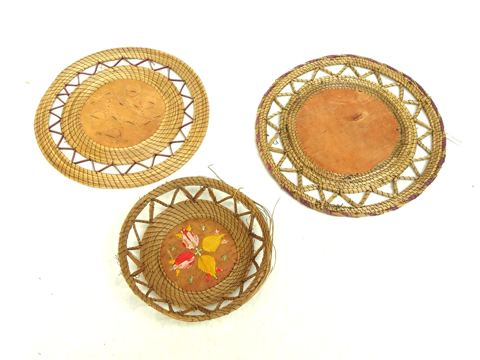
Three round coiled sweetgrass trays or shallow baskets with birch-bark bases, one with polychrome porcupine-quill floral decoration.

Each has a disc base of birch bark stitched into coiled sweetgrass, with an open zigzag 'star' border in sweetgrass or purple-dyed splint. The smallest dish keeps a red, yellow and green quill flower. On the largest tray the quill decoration is almost entirely lost; pinholes and stray quill stubs outline the former design. The third has only faint traces. These are Ojibwa/Odawa souvenir work from the Great Lakes and Ontario, mid-20th century, and they sell cheaply unless the quillwork is intact.

Attribution
Ojibwa / Odawa — Great Lakes, Ontario (medium)
Era
c. 1930-1960
Materials
birch bark, sweetgrass, thread, porcupine quills, dyed splint
Objects
3

Does the title hold up?

Count of 3 is confirmed. The materials and form fit Ojibwa Great Lakes souvenir work. 'Vtg.' is accurate.

Condition

There is major quill loss on two of the three: only pin holes and stubs remain. Sweetgrass ends are loose and splayed on the small dish's rim. The birch bark has a peeled patch on the underside of one. Purple dye is faded.

Pricing basis

Intact Ojibwa quill and sweetgrass boxes sell for about $80-150 each on eBay. Trays that have lost their quills bring much less, so the lot is valued mainly on the one decorated dish.

Trade Beads — Venetian 8 listings · $920

No. 25Medium confidenceNotable

Venetian 6-layer chevron bead strand with large chevron and loose beads

Seller's title“17th C. Venetian Large Chevron Glass African Trade Bead Necklace - MG339” eBay ↗

Our estimate$450range $275 – $750

ResultAuction pending

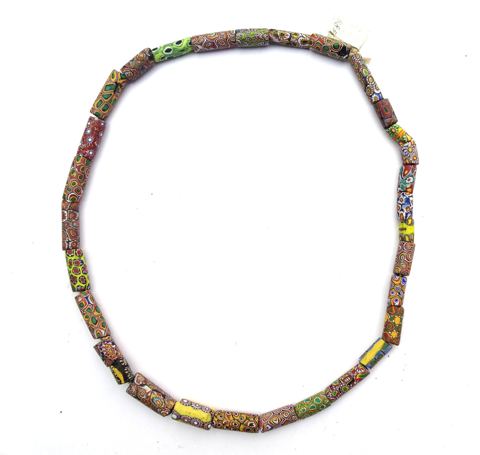
A partial raffia-strung strand of blue/white/red Venetian chevron beads with one very large chevron centerpiece and about 9 loose chevrons, with old dealer tags.

About 30 drawn chevron beads in total. Most are 15-25mm barrel chevrons with faceted, ground ends that show the star layers, and many look like 6-layer beads (cobalt/white/red/white/blue/white). The centerpiece is a large bead of roughly 40-45mm with a ground star end, and an old tag says it is 7 layers ('from 1500s', 'inside: green, white, green, white, red, white, blue'). The beads have a weathered, frosted surface and pitted cores that suggest genuine age. They are most consistent with 19th-century Venetian production for the African trade, and some may be earlier. The large bead and the number of good-sized 6-layer beads are what carry the value.

Attribution
Venetian (Murano), traded to West Africa (medium)
Era
c. 1800-1900 (largest bead possibly earlier)
Materials
Drawn multi-layer glass (cobalt, white, brick red); raffia and cotton/yarn string
Objects
1

Does the title hold up?

The beads are genuine old Venetian chevrons, mostly 6-layer. The '17th C.' claim rests on a dealer tag and can't be confirmed from photos; a 19th-century date is more likely for most of the strand.

Condition

Frosted, weathered surfaces with some pitting. One small bead has a chipped and stained end. The strand is incomplete: raffia ties are loose and some beads are off the string. Old handwritten price and provenance tags are included. Photos can't confirm the layer count of the green inner core, which isn't visible.

Pricing basis

Single large 6-layer chevrons sell for about $30-150 and 20-bead 17mm 6-layer strands are listed around $150. The 40mm+ centerpiece plus about 30 beads in a no-reserve auction suggests a mid-hundreds result.

No. 26Medium confidence

Cornaline d'Aleppo yellow-heart and white-heart bead strand

Seller's title“19th C. Cornaline D'aleppo Venetian Red Yellow Heart Trade Bead Necklace - MG330” eBay ↗

Our estimate$85range $50 – $140

ResultAuction pending

A strand of about 50 red-over-yellow and red-over-white 'Cornaline d'Aleppo' beads, mostly round wound beads plus a few drawn tubes, on raffia.

Most beads are round wound beads of about 10-15mm. Their exposed ends show yellow cores, and a few show white cores. About six drawn tube beads at the top show yellow or white hearts. The surfaces have wind lines, frosting, pitting and some chipped ends, which is consistent with genuine age. Venetian red-heart beads like these are common on the African trade-bead market. A mixed yellow-heart strand like this is modest in value.

Attribution
Venetian (possibly some Bohemian) red-heart beads, traded to West Africa (medium)
Era
c. mid-late 19th century
Materials
Wound and drawn glass, red over yellow or white cores; raffia
Objects
1

Does the title hold up?

The red-over-yellow/white-heart construction matches the 'Cornaline d'Aleppo' description, and a 19th-century date is reasonable.

Condition

Several beads have chipped ends and surface pitting or abrasion. One tube bead has a broken end. Restrung on raffia with a separate cotton tie.

Pricing basis

Category estimate: old yellow- and white-heart strands of this size typically sell for about $50-150 on eBay. I didn't verify a specific sold comparable.

No. 27Low confidence

Venetian millefiori strand and red stone tube bead strand

Seller's title“19th C. Millefiori Venetian Catlinite African Trade Bead Necklaces - MG333” eBay ↗

Our estimate$80range $45 – $140

ResultAuction pending

Two strands: about 70 short cylindrical Venetian millefiori beads in yellow, green, red and black/white patterns, and about 25 long red stone tube beads.

The millefiori strand is a standard late-19th to early-20th-century Venetian mosaic trade-bead strand, with short cut tubes in yellow/green 'eye' patterns and one larger yellow-red bead. The second strand is made of hand-drilled, heavily pitted red tubes of about 25-40mm. They look like a porous red stone (jasper or bauxite-type) rather than smooth catlinite (pipestone), so I treat 'catlinite' as unconfirmed. They read as an African stone strand and could be of some age.

Attribution
Venetian (millefiori); red tubes probably West African/Saharan stone (low)
Era
c. 1880-1930 (millefiori); red stone strand undetermined
Materials
Drawn mosaic glass; red stone (possibly jasper/bauxite, not clearly catlinite); cotton string
Objects
2

Does the title hold up?

The millefiori fits a late-19th to early-20th-century date. The red tubes look pitted and porous, which is not typical of catlinite.

Condition

Millefiori beads show minor end chips and wear. The red tubes have heavy pitting and natural voids and some broken ends. Both strands are restrung. A tag reads '8142'.

Pricing basis

Category estimate: millefiori strands usually sell for about $30-70, and an old African red stone tube strand adds about $25-70.

No. 28Medium confidence

Venetian millefiori trade bead strand

Seller's title“19th C. Millefiori Venetian African Antique Trade Bead Necklace - MG331” eBay ↗

Our estimate$75range $45 – $120

ResultAuction pending

Strand of about 40 mixed Venetian millefiori trade beads, long tubes and short cut sections, in yellow, red, blue and green mosaic patterns.

These are drawn mosaic (millefiori) beads, mostly tubular, mixed with short sections and a few yellow and red single-cane beads. The mix of patterns and lengths is typical of African-restrung strands from the late 19th to early 20th c. There are visible gaps, and the bead sizes are uneven. It has an old tag ('9397 a'). Millefiori strands are plentiful on the market.

Attribution
Venetian (Murano), African trade (high)
Era
c. 1890-1930
Materials
drawn mosaic glass, cotton string
Objects
1

Does the title hold up?

Venetian millefiori is confirmed. 19th C. is possible, but most such strands date c. 1890–1930.

Condition

There are minor end chips and surface wear, one paper label is wrapped around a bead, and gaps show on the string. Length is not given.

Pricing basis

Antique millefiori strands commonly sell for about $50–150 depending on length and bead size. This is a medium strand with mixed sizes.

No. 29Low confidence

Twelve Venetian striped glass bead cane rods

Seller's title“(x12) Antique Millefiori Venetian Glass Trade Bead Rods - MG341” eBay ↗

Our estimate$50range $25 – $90

ResultAuction pending

Two taped bundles of hollow Venetian glass canes, 12 rods in all, for striped trade beads, with white, yellow, green and red-lined cores and multicolor stripes.

These are drawn hollow cane rods, the raw stock from which Venetian striped beads were cut. The cross-sections show cased cores (yellow, white, green, oxblood-lined) with applied colored stripes. One rod has a zig-zag 'star' casing in cross-section. They are striped canes, not millefiori (mosaic) canes as the title says. Bead-making canes are a niche collector item, usually cheap per rod.

Attribution
Venetian (Murano) bead cane (medium)
Era
20th c. (age indeterminate)
Materials
drawn glass cane
Objects
12

Does the title hold up?

The count of 12 is supported (two bundles of 6). They are striped canes, not millefiori, and 'Antique' is unverified.

Condition

Rods look intact with clean cut ends; the bundles are taped and labeled ('8 oz'?). Photos don't show whether any rods are chipped, and rod length is not given.

Pricing basis

Category estimate: Venetian bead-making cane lots usually sell for about $20–80 on eBay. Older documented canes bring more.

No. 30Medium confidence

Venetian millefiori trade bead strand

Seller's title“19th C. Millefiori Venetian African Glass Trade Bead Necklace - MG349” eBay ↗

Our estimate$95range $60 – $150

ResultAuction pending

Strand of about 32 long tubular Venetian millefiori trade beads in a wide variety of mosaic patterns, with an old 'Millif. Afr.' tag.

This is a well-matched strand of mostly long drawn mosaic tubes, about 3–4 cm judging by hand scale. It includes yellow-ground, green-ground and red-ground patterns and several scarcer designs. The larger size and variety give it more appeal than the average mixed strand. It is typical of Venetian export beads of c. 1890–1930.

Attribution
Venetian (Murano), African trade (high)
Era
c. 1890-1930
Materials
drawn mosaic glass, cotton string
Objects
1

Does the title hold up?

Venetian millefiori African trade is supported. '19th C.' is possible for some beads, but most date around 1900.

Condition

There are minor chips at bead ends and light surface wear. Strung on old string with a paper tag. Overall condition is good.

Pricing basis

Long-tube antique millefiori strands commonly sell for about $70–200, and this is a full strand of large tubes.

No. 31Medium confidence

White 'padre' glass trade bead necklace

Seller's title“18th C. White Padre Beads Venetian Glass African Trade Bead Necklace - MG340” eBay ↗

Our estimate$30range $18 – $55

ResultAuction pending

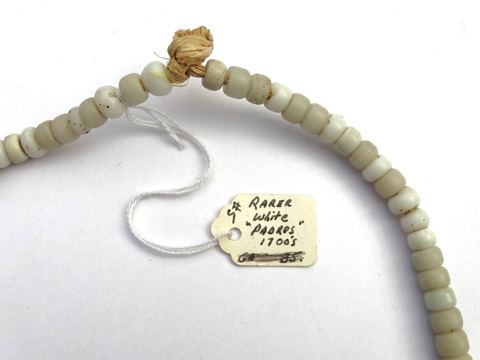
Single strand of about 140 small opaque white and greyish-white wound/drawn 'padre'-type glass beads, raffia-tied, with old tags reading 'Rarer white Padres 1700's' and '? Bata'.

These are small donut/barrel beads, about 6-8 mm, in chalky white to grey-beige opaque glass, some with brown iron staining and pitting. Beads called 'padres' are traditionally associated with early Chinese/European trade beads, but similar white beads were traded in Africa and Ethiopia into the 20th century. The old tags are dealer opinions, not evidence. White padre strands are a common, low-value trade bead type.

Attribution
European or Chinese 'padre'-type glass, African/Ethiopian trade (low)
Era
probably 19th to early 20th c. (18th c. unverified)
Materials
opaque white glass, raffia tie, cotton string
Objects
1

Does the title hold up?

The '18th C.' claim rests only on an old dealer tag. The beads look consistent with ordinary 19th-20th c. white padre trade beads, and the age cannot be confirmed.

Condition

Shows surface pitting, brown staining in some beads, minor chips and color variation. Raffia knot with no clasp.

Pricing basis

Retail white padre strands are offered at about $15-45 (Africa Direct ~$25, The Bead Chest ~$45, Etsy ~$27), and the auction outcome should sit around the lower-middle of that range.

No. 32Medium confidence

Micro chevron Venetian trade bead strand

Seller's title“19th C. Antique Micro Chevron Venetian Trade Bead Necklaces - MG346” eBay ↗

Our estimate$55range $30 – $90

ResultAuction pending

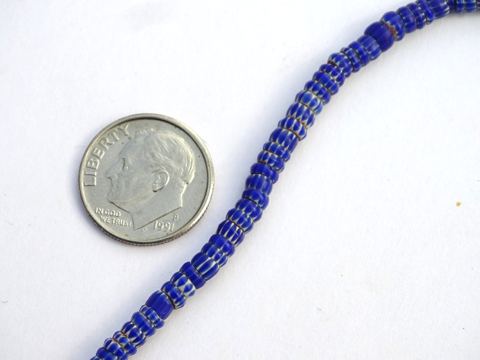
Single strand of a few hundred tiny (about 3-4 mm) cobalt blue-and-white chevron/star rondelle beads, shown against a dime for scale.

These are small drawn cane beads cut into short rondelles. Their cobalt outer layer and white star/striped interior are the 'micro chevron' type made in Venice (and likely also Bohemia) for the African trade in the late 19th-early 20th century. They are much smaller and less valuable than large multi-layer chevrons, but micro chevron strands are a recognized collector type. A few red-brown beads are mixed in.

Attribution
Venetian (possibly Bohemian) drawn micro chevron, African trade (medium)
Era
c. 1880-1930
Materials
drawn layered glass, string
Objects
1

Does the title hold up?

Micro chevron identification and late-19th/early-20th c. age are reasonable. The title says 'Necklaces' (plural), but the photos show only ONE strand.

Condition

Shows typical small chips and wear. The strand is uniform with a few odd beads. Old paper tag, no clasp.

Pricing basis

Small antique Venetian chevron strands retail from about $50 up to $400 for larger beads (Beadazzled 8-15 mm strand $400), and micro-size rondelle strands sit at the bottom of that market, about $30-90 at auction.

Trade Beads — Bohemian & Dutch 9 listings · $550

No. 33Medium confidence

Wound cobalt and clear glass trade bead strand

Seller's title“18th C. Dutch Cobalt Clear Glass African Trade Bead Necklace - MG338” eBay ↗

Our estimate$65range $35 – $110

ResultAuction pending

A single strand of about 45 round wound cobalt-blue glass beads mixed with clear/frosted beads and one olive-yellow bead, on old cotton cord.

The beads are roughly 12-16mm, wound on a mandrel, with seed bubbles, pitted and frosted surfaces, and slightly lopsided shapes. These are typical of the 'Dutch' or 'Dogon' wound cobalt beads traded into West Africa. Clear and greenish beads are mixed in. This is a common category on the trade-bead market, and the beads look old and naturally worn.

Attribution
Probably Dutch or Bohemian wound glass, traded to West Africa (medium)
Era
c. 18th-19th century (wound-bead type); restrung in the 20th century
Materials
Wound cobalt glass, clear/translucent glass; cotton cord
Objects
1

Does the title hold up?

The wound cobalt and clear beads fit the Dutch/Bohemian trade type. An 18th-century date is plausible for the type but can't be confirmed for these specific beads.

Condition

Frosted, pitted surfaces from wear. One clear bead looks chipped or cracked. Old cord is tied in a knot. No significant breakage visible.

Pricing basis

Comparable Dutch 'Dogon' cobalt wound-bead strands on WorthPoint, eBay and Etsy typically sell for about $40-120, depending on bead size and strand length.

No. 34Low confidence

Two strands: green melon 'watermelon' beads and black skunk beads

Seller's title“19th C. Bohemian Czech Glass Watermelon Skunk Trade Bead Necklaces - MG328” eBay ↗

Our estimate$80range $45 – $130

ResultAuction pending

Two necklaces: a strand of about 30 green ribbed oval 'watermelon' beads with red/white ends, and a long double strand of about 80 black glass beads with white and pink dots ('skunk' beads).

The green beads are oval melon-ribbed glass beads with red and white chevron-style ends, the type sold as Bohemian 'watermelon' trade beads. The black beads are round wound beads of about 10mm with applied white and pink dots. Both are standard types on the African trade-bead market from the late 19th to early 20th century. Neither is rare.

Attribution
Bohemian (Czech) and/or Venetian, traded to West Africa (medium)
Era
c. 1880-1930
Materials
Molded/drawn and wound glass; raffia, cotton and grass cords
Objects
2

Does the title hold up?

The types match the title ('watermelon' and 'skunk'). A 19th-century date is plausible but could equally be early 20th century.

Condition

The skunk beads show worn, chipped and pitted dots. The green strand has a few chipped ends. Both are restrung. A dealer tag reads 'CK02'.

Pricing basis

Category estimate: single strands of skunk or watermelon beads usually sell for about $25-70, so two strands together suggest about $50-130.

No. 35Medium confidence

Russian blue faceted glass trade bead strand

Seller's title“19th C. Russian Faceted Cobalt Opaque Trade Bead Necklaces Strand - MG329” eBay ↗

Our estimate$140range $90 – $220

ResultAuction pending

Single strand of about 80 faceted cobalt and opaque cornflower-blue "Russian blue" glass trade beads on old fiber cord, with a handwritten collection tag.

These are hand-faceted drawn beads in hexagonal and barrel sections, mixing translucent cobalt with opaque periwinkle examples. Surfaces are pitted and worn, there is soil in the perforations, and one bead is heavily patinated. The beads are a classic 'Russian blue' type, probably Bohemian-made and traded in the 18th–19th centuries, and the wear supports real age. The old handwritten tag reads roughly 'From Mali, African trade beads called "Russian" ... Heide', which suggests a period dealer or collection provenance. Russian blue sells reliably to collectors. Mixed-size strands of about 80 beads usually bring low-to-mid hundreds.

Attribution
Bohemian (so-called Russian blue), traded in West Africa (Mali per tag) (medium)
Era
c. 1800-1900
Materials
faceted drawn glass (cobalt and opaque blue), fiber cord
Objects
1

Does the title hold up?

Photos support faceted cobalt/opaque blue 'Russian' beads with genuine age wear; a 19th-c. date is plausible. A tag-only provenance points to Mali.

Condition

Heavy surface wear, pitting and chipping on facets; soil residue; mixed sizes, consistent with use-wear. Strung on old split fiber/grass cord with fragile ends; the original paper tag is attached. Total length and bead dimensions are not given.

Pricing basis

Comparable old Russian blue strands of about 80–100 beads are listed and sold at roughly $85–160. Strands documented as 18th–19th c. reach far higher at galleries, but eBay results cluster in the low hundreds.

No. 36Medium confidence

Two strands — blue padre beads and turquoise/yellow trade beads

Seller's title“19th C. Bohemian Czech Dutch Glass African Padre Trade Bead Necklace - MG327” eBay ↗

Our estimate$45range $25 – $75

ResultAuction pending

Short strand of about 50 sky-blue wound 'padre' beads plus a longer necklace of turquoise drawn tube beads with yellow round beads and a large blue oval center bead.

The padre strand has opaque, slightly irregular wound beads with typical pitting and spotting, consistent with 19th–early 20th c. trade material. The second necklace mixes cut turquoise drawn tubes, opaque yellow rounds and a glossy oval center bead. It has an old price tag ('trade beads... $30') and looks like a later 20th-c. assembled necklace. Both strands are common types with modest per-strand value.

Attribution
Venetian / Bohemian beads, West African trade (medium)
Era
padre strand c. 1880-1930; second strand likely 20th c.
Materials
wound and drawn glass, cotton thread
Objects
2

Does the title hold up?

The padre strand is plausibly late 19th c. The turquoise/yellow strand looks 20th-c. The 'Bohemian Czech Dutch' wording covers several possible makers and is not specific.

Condition

Padre beads show surface pitting and minor chips; the second strand is clean and bright. Both have old string tags. No lengths are given.

Pricing basis

Category estimate: short padre strands and common mixed drawn-bead strands typically sell for $15–40 each on eBay.

No. 37Low confidence

Black and brown wound glass trade bead strand

Seller's title“19th C. Dutch Opaque Black Coffee Bean Trade Bead Necklaces Strand - MG330” eBay ↗

Our estimate$45range $25 – $80

ResultAuction pending

Strand of about 40 wound glass trade beads: elongated opaque black 'coffee bean' style beads and translucent brown oval beads with white trailed stripes.

The black beads are irregular wound cylinders and ovals with lumpy surfaces and large perforations. The brown beads are oval wound beads with a single white trailed line. The black beads are typical of 19th-c. Dutch/Bohemian African trade material. The striped brown beads could be similar age or a later addition. The strand carries an old inventory tag ('8888'). This is collectible but common material.

Attribution
Dutch or Bohemian wound beads, West African trade (medium)
Era
c. 1850-1920
Materials
wound glass, cotton string
Objects
1

Does the title hold up?

The black wound beads are consistent with 19th-c. trade beads. 'Coffee bean' is a loose label for these elongated forms, and the brown striped beads are not mentioned in the title.

Condition

There is surface wear and small pits on the black beads; the brown beads are in good condition. Old string. No length is given.

Pricing basis

Category estimate: single strands of common old wound black or dark trade beads typically sell for $25–75 on eBay.

No. 38Low confidence

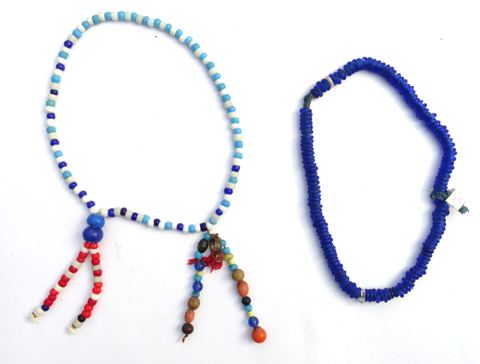
Padre bead tassel necklace and cobalt disc bead strand

Seller's title“19th C. Antique Dutch Cobalt Venetian Glass Padre Trade Bead Necklaces - MG345” eBay ↗

Our estimate$45range $25 – $75

ResultAuction pending

Two strands: a white, sky-blue and cobalt padre-bead necklace with two dangle tassels, and a long strand of frosted cobalt disc beads.

The first necklace is strung from opaque white, light blue and cobalt wound/drawn 'pony' or padre beads. It has two large blue rounds and dangles of red-and-white beads and mixed stone/glass beads with a brass element and red yarn, apparently an African-assembled ornament. The second strand is many frosted cobalt ring/disc beads on old cloth-wrapped cord with a 'Blue' tag. They resemble Bohemian or African-made blue discs. These are common types with modest value.

Attribution
Venetian/Bohemian beads, African-assembled (low)
Era
early-mid 20th c. (some beads possibly late 19th c.)
Materials
glass, brass, wool yarn, cotton/cloth cord
Objects
2

Does the title hold up?

Padre-type beads are present, but the 'Dutch cobalt Venetian' attribution and 19th-c. date are only loosely supported. The disc strand could be 20th c.

Condition

Both strands are intact. Some beads show light wear and soil, and the disc strand's cord is frayed at the wrapped section. Lengths are not given.

Pricing basis

Category estimate: common padre and cobalt disc strands typically sell for $20–40 each on eBay.

No. 39Medium confidence

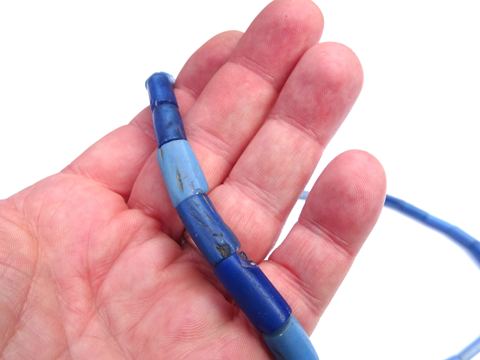
Blue drawn-glass tube trade bead necklace

Seller's title“19th C. Dutch Cobalt African Glass trade Bead Necklace - MG336” eBay ↗

Our estimate$35range $20 – $60

ResultAuction pending

Single strand of about 40 drawn translucent blue glass tube beads in mixed cobalt-to-light-blue shades, with an old 'Dutch ... African' tag.

These are drawn tube beads cut from cane, about 10-20 mm long, in mixed shades from deep cobalt to pale sky blue. Several have worn, chipped ends and the matte surface from long use. The old tag says 'Dutch', but drawn blue tubes like these were made in Venice and Bohemia as well as the Netherlands, and the source cannot be settled from photos. Most are African-market trade material of the late 19th to early 20th century.

Attribution
European (Dutch, Venetian or Bohemian) drawn glass, African trade (low)
Era
c. 1870-1930
Materials
drawn translucent blue glass, cotton string
Objects
1

Does the title hold up?

Drawn tubes are consistent with 19th-early 20th c. trade beads, but the photos cannot confirm Dutch over Venetian/Bohemian origin. The beads are mostly mid-blue, not true cobalt.

Condition

Several beads have chipped ends, surface scratches and dulling. Restrung on white cotton with no clasp. Color varies across the strand.

Pricing basis

This is a category estimate: plain drawn-glass trade bead strands typically sell for about $20-60 on eBay and Etsy, and no direct sold comparable was found.

No. 40Low confidence

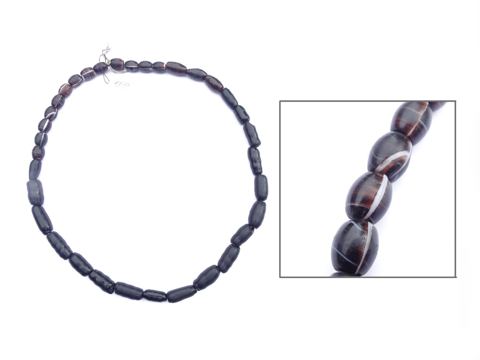
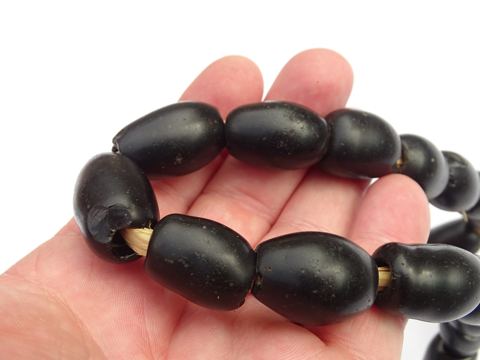
Large black wound glass trade bead necklace

Seller's title“19th C. Dutch Large Black Glass African Trade Bead Necklace - MG341” eBay ↗

Our estimate$60range $35 – $110

ResultAuction pending

Single strand of about 32 large oval/barrel black wound glass beads (about 20-25 mm), strung on twisted raffia with a raffia tie.

These are heavy, opaque black wound glass beads in oval and barrel shapes, with large perforations. Several have flaked or conchoidal chips at the ends, and the surfaces show sandy pitting. Beads of this type were made in Bohemia and the Netherlands (and Venice) for the West African trade. The raffia stringing suggests the strand came directly from the African market. Large black wound beads are moderately desirable for size.

Attribution
European (Bohemian or Dutch) wound glass, West African trade (low)
Era
c. 1870-1930
Materials
opaque black wound glass, raffia
Objects
1

Does the title hold up?

Large wound black beads are consistent with late 19th-early 20th c. European trade glass. A Dutch origin is plausible but not confirmable from photos.

Condition

Multiple beads have chipped perforation ends (photos 4, 5, 7, 8), along with surface pitting and grime. Strung on raffia with no clasp.

Pricing basis

This is a category estimate: large old black wound trade bead strands typically sell for about $40-120 on eBay depending on size and chips, and no close sold comparable was found.

No. 41Medium confidence

Jade-green rolled glass bead necklace

Seller's title“19th C. Czech Bohemian Jade Green Rolled Glass Trade Bead Necklace - MG351” eBay ↗

Our estimate$35range $20 – $60

ResultAuction pending

Long strand of about 120 round 8-9 mm translucent jade-green glass beads with old tags reading 'Rolled glass 7734a ... Jade color' and 'Chinese [crossed out, 'Czech' written over] Hard R... beads – about 18__'.

These are wound/rolled round beads in translucent milky 'jade' green glass with fine bubbles and slightly irregular ends. Bohemian (Czech) makers produced imitation-jade glass like this, and Chinese makers did too. The old tag itself wavers between the two, so origin cannot be fixed from photos. The strand is attractive but common in type.

Attribution
Bohemian (Czech) or Chinese wound glass (low)
Era
c. 1880-1930
Materials
translucent green wound glass, cotton string
Objects
1

Does the title hold up?

The old tag supports the 'Czech' and '18xx' claims, but it is a dealer's note, and the attribution was itself corrected from Chinese. Age and origin are both plausible but unconfirmed.

Condition

Beads look intact, with minor surface wear and debris around perforations. Strung on old cotton with no clasp. Old paper tags are attached.

Pricing basis

This is a category estimate: single-color old Bohemian/Chinese glass strands typically sell for about $20-60 on eBay.

Trade Beads — Other 6 listings · $350

No. 42Low confidence

Box lot of 11 mixed bead necklaces (snake beads, amber-color, kukui, etc.)

Seller's title“BOX LOT! 19th C. Czech Bohemian Glass Amber Trade Bead Necklace - MG351” eBay ↗

Our estimate$95range $50 – $200

ResultAuction pending

A mixed box lot of about 11 necklaces: two cobalt and two turquoise/green glass 'snake' bead strands, a heavy amber-color disc strand, a faceted amber-color strand, two kukui-nut leis, a coconut/shell necklace, an onyx/calcite pendant necklace, and two seed-bead strands.

The most marketable pieces are the four molded-glass 'snake' (vertebra) bead strands, a common 20th-century Bohemian/African trade type. The large rough amber-color disc strand could be genuine amber or copal and is the main uncertainty in the value. The faceted oval strand looks like glass or Bakelite/plastic rather than amber. The rest (kukui leis, coconut shell, seed beads, onyx/calcite pendant with brass washers) is modern costume or souvenir material.

Attribution
Mixed: Bohemian/West African snake beads, Hawaiian kukui, assorted modern (low)
Era
Mostly 20th century
Materials
Molded glass, amber/copal or resin, faceted glass or plastic, kukui nut, coconut, shell, onyx/calcite, brass, leather
Objects
11

Does the title hold up?

'19th C. Czech Bohemian Glass Amber' is overstated. The lot is mostly 20th-century glass and modern items, and the amber is unverified.

Condition

General wear. Some snake beads have chipped edges. The amber-color disc strand shows surface crazing and abrasion. I didn't see any amber testing or weights.

Pricing basis

Category estimate: snake-bead strands sell for about $15-30 each, and kukui and costume items add little. The upper end of the range assumes the large disc strand is real amber or copal.

No. 43Low confidence

Three Sinú-type pottery bead strands with two carved stone face pendants

Seller's title“Ancient Pre-Columbian Pottery Bead Necklace Columbia Jade Pendants - MG350” eBay ↗

Our estimate$90range $45 – $160

ResultAuction pending

Three strands of small fired-clay tube and disc beads in orange, buff, grey and green tones, labeled 'Colombia / Sinú', with two carved green and black stone face pendants.

The clay beads are small cylinders and discs of about 3-8mm in mixed earth tones. They have a weathered, chalky surface, consistent with excavated Sinú/Zenú ceramic beads from northern Colombia, which are commonly restrung and sold. An old note reads 'Colombia, Sinú, 700 yr old beads'. The two pendants (a black profile head and a green mottled serpentine/jasper face) are carved in a modern, souvenir-style Mesoamerican manner, and one has a modern brass jump ring. They are unlikely to be ancient or real jadeite.

Attribution
Sinú/Zenú, Colombia (beads); pendants probably modern Latin American souvenir carvings (low)
Era
Beads possibly c. 500-1500 CE; pendants 20th century
Materials
Fired clay/pottery beads; serpentine or jasper-like green and black stone; cotton string; brass ring
Objects
5

Does the title hold up?

The clay beads plausibly match the Sinú pre-Columbian type. The 'jade pendants' look like modern carved serpentine/jasper and not ancient jade.

Condition

All restrung on modern string. The beads show surface wear and loss of color. Pendants are intact with one brass ring. I can't confirm the beads' age or authenticity from photos.

Pricing basis

Restrung Sinú/Zenú pottery-bead strands typically sell for about $25-60 each on eBay and Etsy, and the modern pendants add little.

Possibly sensitive / NAGPRA

Excavated pre-Columbian beads are probably grave goods and may be subject to Colombian cultural-patrimony and export laws, so provenance is unknown.

No. 44Medium confidence

Three glass bead strands — striped, eye and recycled blue

Seller's title“19th C. Dutch Dogon Cobalt Skunk African Glass Trade Bead Necklaces - MG332” eBay ↗

Our estimate$35range $20 – $60

ResultAuction pending

Three strands: small Venetian-style striped oval beads, cobalt eye beads, and frosted cobalt and clear disc beads on leather cord.

Strand 1 has small drawn oval beads with green, blue, red and white stripes, a common Venetian/Czech type. Strand 2 has uniform glossy cobalt beads with white-and-blue dot eyes. These look like modern evil-eye beads, not old Dogon/'skunk' eye beads. Strand 3 has frosted cobalt and clear ring beads on modern leather cord, consistent with contemporary recycled or Javanese glass. Only the striped strand has much trade-bead appeal.

Attribution
Mixed: Venetian/Czech striped; modern eye beads; modern recycled glass (medium)
Era
striped strand early-mid 20th c.; other two late 20th c.
Materials
drawn and wound glass, leather cord
Objects
3

Does the title hold up?

The photos do not support '19th C. Dutch Dogon cobalt skunk'. The eye beads are uniform and modern-looking, and the disc strand is modern.

Condition

All three strands are in good condition. The eye and disc strands look fresh, with no age wear. The disc strand is on modern leather.

Pricing basis

Category estimate: mixed modern and mid-century glass bead strands sell for about $10–25 each on eBay.

No. 45Medium confidence

Chinese 'Peking' cranberry-red glass bead necklace

Seller's title“19th C. Chinese Peking Ruby Glass Bead Necklace Qing Dynasty - MG335” eBay ↗

Our estimate$55range $35 – $90

ResultAuction pending

Single strand of about 60 transparent cranberry/ruby-red wound glass beads, round and oval, with an old 'Peking cranberry beads' tag.

Hand-wound transparent ruby-red glass beads, alternating round and elongated oval/teardrop forms, with seed bubbles and slightly irregular ends typical of Chinese wound glass. The shapes and color match the 'Peking glass' beads exported in quantity in the late 19th and early 20th century. The strand is restrung on modern white cotton. Old Peking glass strands like this are common and sell in modest ranges unless the beads are large or imperial-quality.

Attribution
Chinese (export 'Peking glass') (medium)
Era
c. 1880-1930
Materials
wound transparent red (gold-ruby or selenium) glass, cotton string
Objects
1

Does the title hold up?

The beads fit late-Qing/Republic-era Chinese wound glass, but '19th C. Qing Dynasty' cannot be confirmed over early 20th century. 'Ruby' is a color, not gemstone.

Condition

Beads look intact, with internal bubbles and minor surface wear. Restrung on new cotton with no clasp. The photos cannot confirm whether the red is gold-ruby or a later colorant.

Pricing basis

Vintage/antique Peking glass bead strands on Ruby Lane, Etsy and eBay mostly run about $30-150, and no-reserve eBay auctions land at the low-middle of that range.

No. 46Medium confidence

Two trade bead strands: striped powder-glass tubes and red white-hearts

Seller's title“19th C. Two African Glass Sand White Heart Glass Trade Bead Necklaces - MG337” eBay ↗

Our estimate$35range $20 – $60

ResultAuction pending

Two strands: about 45 yellow-green tube beads with black, red and green swirled stripes (tagged 'sand cast'), and a long strand of small red white-heart seed beads with two cowrie shells.

The larger strand is matte yellow-green tubular glass beads with trailed black/red/green stripes. Its old tag reads 'sand cast', which points to West African (Ghanaian) powder-glass or similar recycled-glass work rather than European wound glass, likely mid-20th century. The second strand is small drawn red-over-white 'white-heart' seed beads (Venetian or Bohemian, late 19th-early 20th c.), strung with a pair of cowrie shells, with an old tag mentioning Mali and Venetian or Czechoslovakian origin. Both are common African-market material.

Attribution
West African powder glass (striped strand); Venetian/Bohemian white-hearts (red strand) (low)
Era
white-hearts c. 1880-1930; striped tubes probably 20th c.
Materials
powder/recycled glass, drawn glass, cowrie shell, cotton and raffia-type string
Objects
2

Does the title hold up?

The count of two strands is correct. The red white-hearts can plausibly be 19th c., but the striped 'sand cast' strand is more likely 20th-c. African-made glass, so a '19th C.' claim for the whole lot is doubtful.

Condition

The striped beads have surface wear and look intact. The red seed beads show normal wear, and one cowrie is chipped/open. Both strands are tied, with no clasps. Old paper tags are attached.

Pricing basis

This is a category estimate: small white-heart seed strands and African powder-glass strands each typically sell for about $15-40 on eBay.

No. 47Medium confidence

Cobalt blue round glass bead necklace

Seller's title“Antique Chinese Peking Glass Cobalt Trade Bead Necklace - MG347” eBay ↗

Our estimate$40range $25 – $70

ResultAuction pending

Hand-knotted strand of about 49 uniform 12-14 mm transparent cobalt-blue round glass beads on blue thread.

These are clear, transparent cobalt glass spheres, very uniform in size, with visible straight perforation channels and a few seed bubbles. They are knotted between beads on blue cotton. The uniformity, clarity and knotted stringing suggest a 20th-century jewelry necklace rather than a worn African-market trade strand. Chinese manufacture is plausible but not demonstrable.

Attribution
Probably Chinese ('Peking') or other 20th-c. glass (low)
Era
probably early-mid 20th c.
Materials
transparent cobalt glass, knotted cotton thread
Objects
1

Does the title hold up?

The photos support cobalt glass, but the beads show no trade wear and look like 20th-c. jewelry beads, so 'Antique ... Trade Bead' is generous.

Condition

Beads look bright, with minimal wear and minor surface marks. The knotted thread is intact. No clasp is visible.

Pricing basis

Vintage Peking-type single-color glass necklaces on Ruby Lane, Etsy and eBay commonly sell for about $30-80.

Amber & Resin 2 listings · $305

No. 48Medium confidence

Three phenolic resin 'African amber' bead necklaces, 583 g

Seller's title“(x3) Antique Copal Bakelite Resign Amber Bead Necklaces 583 Grams - MG343” eBay ↗

Our estimate$220range $140 – $350

ResultAuction pending

Three necklaces of large butterscotch and cognac-colored beads (a barrel-bead strand, a rondelle strand and a leather-cord pendant necklace) weighing 583 g together.

The opaque, marbled butterscotch beads with swirl patterns and painted 'crackle' lines look like the phenolic resin (Bakelite-type) 'African amber' made in Europe in the early-to-mid 20th century for the West African and Saharan trade. The seller's own photo shows a Formula 409 swab test turning yellow, which points to phenolic resin. A few translucent beads with inclusions may be copal or genuine amber, but that isn't confirmed. Large old phenolic trade beads are collectible in their own right.

Attribution
European phenolic resin for the African trade (possibly some copal or amber) (medium)
Era
c. 1920-1960
Materials
Phenolic resin (Bakelite-type), possibly copal; wire, cord and leather
Objects
3

Does the title hold up?

The '583 Grams' is supported by the scale photo. The swab test points to phenolic resin/Bakelite, and real amber isn't demonstrated.

Condition

Surface wear and scratches, painted or faux crackle on some beads, and one bead with dark encrusted surface lines. The scale shows 583 g with all three strands on the tray.

Pricing basis

Phenolic 'African amber' trade-bead lots sell for roughly $0.30-1.25 per gram (for example, an Etsy strand of 748 g of phenolic barrels sold for $950 retail), and auction results run lower.

No. 49Medium confidence

Three vintage amber chip necklaces

Seller's title“(x3) Antique Baltic Russian Nugget Amber Necklaces - MG342” eBay ↗

Our estimate$85range $50 – $150

ResultAuction pending

Three amber chip/nugget necklaces: a honey-cognac polished chip strand with a 'Pacific Galleries – Russian amber necklace $100' dealer tag, a dark cherry raw-nugget strand with a brass barrel clasp, and a short cognac chip strand.

All three are typical Soviet-era/Baltic tourist-market amber necklaces (about 1950s-1980s): polished flat chips knotted between beads, and a darker strand of rough, partly unpolished nuggets. Inclusions, translucency and color are consistent with Baltic amber, but photos cannot rule out copal or pressed amber. Old Soviet amber chip necklaces sell steadily but individually for modest sums.

Attribution
Baltic amber, likely USSR (Kaliningrad) production (medium)
Era
mid-20th c. (c. 1950-1985)
Materials
amber (presumed Baltic), cotton thread, brass clasp
Objects
3

Does the title hold up?

The count of three matches. 'Russian/Baltic amber' is plausible, but 'Antique' is a stretch: these look like mid-20th-c. Soviet production, and the material is not tested.

Condition

The chip strands look intact. The short cognac strand has loose open string ends with no clasp. The dark strand has a brass barrel clasp. The photos cannot test material or show weight.

Pricing basis

Single vintage Baltic amber chip necklaces on eBay range from about $25 to $70 (a 28" raw-chip strand $59.99, a 62" chip strand $64.99), so three together come to roughly $50-150.

Textiles & Rugs 5 listings · $1,330

No. 50Low confidence

Beaded hide panel with wrapped fringe

Seller's title“Vtg. Native American Indian Plains Sioux Beaded Hide Panel - CR2” eBay ↗

Our estimate$175range $90 – $325

ResultAuction pending

Rectangular soft-tanned hide panel with nine rows of lane-stitched seed beads in yellow, black, light blue and red, with red wool tufts and wrapped fringe thongs.

There are nine horizontal lanes of seed beads in a repeating black-yellow-blue-orange/red scheme, with red wool tufts at the junctions. Eight or so thongs are wrapped in quill or plant fiber with colored wrapped tips. The reverse shows sinew-style row stitching on smooth hide. The bright, uniform beads and clean hide suggest mid-20th c. work. It may be a panel cut from or meant for a bag, or a contemporary or craft piece in Plains style. Value depends heavily on proving age and Native origin, which the photos cannot do.

Attribution
Plains style (Sioux attribution unconfirmed) (low)
Era
c. 1940-1980 (estimated)
Materials
tanned hide, glass seed beads, wool yarn, wrapped fiber/quill on hide thongs, thread or sinew
Objects
1

Does the title hold up?

Photos show Plains-style lane-stitch work but nothing confirms Sioux manufacture. 'Vtg.' (vintage) is consistent with mid-20th c.

Condition

Beadwork is complete, with no obvious loose lanes. There is minor soiling on the hide. Edges are roughly cut, so this may be a fragment or an unfinished piece. Fringe wrapping is worn in places. Nothing in the photos shows whether the stitching thread is sinew or cotton.

Pricing basis

Plains lane-stitch pieces range from about $200 for 20th-c. moccasins (Jeffrey S. Evans 2024) to thousands for 19th-c. bags. An unprovenanced, likely mid-20th-c. panel fragment sells at the low end.

Attribution unconfirmedFeather

The Sioux attribution can't be verified, so Indian Arts and Crafts Act (IACA) rules on tribal attribution apply. The fringe wrapping may be porcupine quill, which is legal, but the photos don't rule out feather or bird material in the wrapping. Inspect before listing.

No. 51Medium confidence

Navajo Two Grey Hills rug by Elouise Brown, 23 x 31 in.

Seller's title“Navajo Two Gray Hills New Mexico Southwest Native American Indian Rug - MG324” eBay ↗

Our estimate$450range $275 – $750

ResultAuction pending

Navajo Two Grey Hills-style rug in natural brown, grey, white and black wool, with a Two Grey Hills Trading Post tag naming the weaver as Elouise Brown, 23 x 31 in.

Handwoven tapestry rug with twin stepped-diamond medallions, terraced corner triangles, a white stepped inner border and a black outer border. These are the classic Two Grey Hills design and natural-color palette. The handwritten Two Grey Hills Trading Post (Tohatchi, NM) tag reads 'Maker Elouise Brown, Size 23 x 31, #139'. The weave is even but medium in count, not the very fine tapestry weave that brings premium Two Grey Hills prices. It is a sound, honest trading-post rug, probably from the later 20th century.

Attribution
Navajo (Diné), Two Grey Hills / Toadlena region, NM; weaver per tag Elouise Brown (medium)
Era
c. 1970-2000
Materials
handspun natural and carded wool, wool warp, twisted-cord selvages with corner tassels
Objects
1

Does the title hold up?

Supported. The design, palette and original Two Grey Hills Trading Post maker tag all fit the title, though the tag is the only evidence of maker identity.

Condition

Appears clean, flat and square, with intact selvage cords and corner tassels and only light surface fuzzing. No visible stains, moth damage or color run. The back and the true weft count cannot be judged from the photos.

Pricing basis

Small (about 2 x 2.5 ft) tagged Two Grey Hills rugs of medium weave by lesser-known weavers typically sell on eBay for a few hundred dollars. Gallery retail for comparable miniature and small Two Grey Hills rugs runs $395 and up, and eBay hammer prices are usually lower.

Attribution unconfirmed

Value depends on Navajo authorship. The trading-post tag supports it, but it can't be independently verified (Indian Arts and Crafts Act).

No. 52Low confidence

Four Yei / Yeibichai pictorial rugs (Navajo and Navajo-style)

Seller's title“(x4) Navajo-Style Southwest Native American Indian Yai Rugs Textiles - MG323” eBay ↗

Our estimate$600range $350 – $1,000

ResultAuction pending

Lot of four pictorial weavings with Yei and Yeibichai figures: a grey sandpainting-style Yei rug, a six-dancer Yeibichai rug, and two runners in tan and cream.

The largest piece is a grey handspun sandpainting-style Yei rug with a rainbow-guardian border and twisted-cord selvage tassels, and it looks like genuine Navajo work. The six-figure Yeibichai dancer rug in grey with pink selvage cords also reads as Navajo. The tan runner (Yeis flanking a corn stalk) and the cream runner (four Yei figures) are flatter, more even commercial-yarn weavings. Either could be Navajo or Mexican (Zapotec) 'Navajo-style' work, which fits the title's hedge. Altogether this is a decorative mid-to-late 20th-century group.

Attribution
Navajo (Diné) for at least two; the two runners are possibly Mexican/Zapotec Navajo-style (low)
Era
c. 1960-1990
Materials
wool (handspun and commercial), aniline dyes, wool warps
Objects
4

Does the title hold up?

The title's 'Navajo-Style' hedge is apt. Two pieces look genuinely Navajo and two may be Mexican copies. The count of 4 matches the photos.

Condition

All four look clean and intact in the group shot, with selvage cords present and no obvious stains or holes. Sizes aren't given, and the backs and weave counts aren't shown.

Pricing basis

Single vintage Navajo Yei rugs of this size sell on eBay for about $250-700. Mexican Navajo-style runners bring roughly $30-80 each. The lot price relies mainly on the two Navajo-looking pieces.

Attribution unconfirmed

Tribal origin of the two runners is uncertain. Navajo vs. Mexican manufacture strongly affects value and IACA marketing claims.

No. 53Medium confidence

Southwest-pattern jacquard wool-blend throw

Seller's title“Vtg. Pendelton Style Wool Horse Blanket Mill Throw - CR12” eBay ↗

Our estimate$45range $25 – $75

ResultAuction pending

Machine-woven jacquard throw in a pastel Southwest/Navajo-inspired pattern with knotted fringe at both ends.

Mill-woven twill-jacquard blanket in a 1980s-90s pastel palette of peach, teal, rust, blue and grey, with a stepped-diamond Southwest design and tied fringe. It has bound edges and no visible maker's label. 'Pendleton Style' is a marketing phrase only, and the piece has no Pendleton features. It is a decorative throw with modest resale demand.

Attribution
Unattributed American or imported mill, Southwest-style (medium)
Era
c. 1985-2000
Materials
machine-woven wool or wool-blend jacquard, knotted yarn fringe
Objects
1

Does the title hold up?

The title correctly says 'Pendleton style' rather than Pendleton. It is a vintage mill throw and not old enough to be called a horse blanket in any collectible sense.

Condition

Generally clean with light pilling. A small spot or nub is visible on one striped end. The fringe is intact but slightly matted, and no label is shown.

Pricing basis

Category estimate. Unlabeled 1980s-90s Southwest jacquard throws routinely sell on eBay for $25-75.

No. 54Low confidence

Indian mission school sewing samplers and arithmetic exercise (4 boards)

Seller's title“Antique Native American Indian Mission School Girl Stitch Smaplers - CR7b” eBay ↗

Our estimate$60range $30 – $140

ResultAuction pending

Three mounted student sewing exercises (stitching, buttonholes, patching) from the Tucson Indian Training School and an arithmetic exercise signed 'Frankie Red Stone, Wolf Point, Montana', stamped 'Property of the Missionary Education Movement'.

These are teaching and exhibition boards. They hold plain-sewing samples (red running and overcast stitch, three strips of worked buttonholes, and a striped-cotton patch labeled 'Patching by Elizabeth Lewis, Tucson'), plus a pencil arithmetic sheet from Wolf Point, Montana (Fort Peck Reservation) titled 'Arithmetic Exercise by Pupil in Indian Mission School'. The Tucson Indian Training School was a Presbyterian boarding school, and the Missionary Education Movement stamp points to a c. 1910-1925 traveling display set. Named pupils and named schools add documentary interest for Indian boarding-school history.

Attribution
Tucson Indian Training School (Presbyterian), Arizona; Wolf Point, Montana mission school (medium)
Era
c. 1910-1925
Materials
Cotton muslin and striped cotton, cotton thread, card mounts, pencil on paper
Objects
4

Does the title hold up?

Partly supported: three boards are sewing samplers from the Tucson Indian Training School. The fourth is an arithmetic exercise, not a sampler. The pupils' gender is not stated, except that 'Elizabeth Lewis' is presumably a girl.

Condition

Mounts are toned with edge chips and creases and have tack and pin holes. One buttonhole strip and its mount have rust and foxing spots. There are loose thread ends. The arithmetic sheet is toned and stained in spots.

Pricing basis

Category estimate for documented Indian boarding-school ephemera. I found no direct sold comparables. Named-school material draws some historian and collector interest, but plain-sewing samples are low-value as textiles.

Pottery 1 listing · $180

No. 55Medium confidence

Six pieces of Southwest and Mexican pottery (Acoma, Mata Ortiz and others)

Seller's title“(x6) Collection Acoma Mata Ortiz Southwest Native American Indian Pottery MG322” eBay ↗

Our estimate$180range $110 – $300

ResultAuction pending

Mixed pottery lot: a signed Mata Ortiz black sgraffito olla (cracked), a B. Cerno Acoma fine-line seed pot, an Acoma canteen signed E.V., two small painted wedding vases, and a red-on-buff tripod jar.

The black burnished Mata Ortiz olla is signed 'Mauro Quezada' (reading uncertain) and is cracked through the shoulder. The Acoma fine-line seed pot is signed 'B. Cerno, Acoma N.M.' and the small Acoma sun-face canteen is signed 'E.V.'. The two small wedding vases are matte-painted souvenir ware, probably Jemez or similar 1970s-90s tourist pieces. The tripod jar with red-on-buff scroll painting looks Mexican or Central American in style. An old handwritten note says it was 'used by Indians', but the note is anecdotal.

Attribution
Acoma Pueblo (2), Mata Ortiz, Chihuahua (1), Pueblo souvenir (2), Mexican/Central American tripod (1) (medium)
Era
c. 1970-2000; tripod jar possibly earlier
Materials
hand-built earthenware, mineral and acrylic paints, burnished blackware
Objects
6

Does the title hold up?

Count of 6 matches. The Acoma and Mata Ortiz claims are supported by signatures, but two wedding vases are generic souvenir ware and the tripod jar isn't Southwest Native.

Condition

The Mata Ortiz olla has a long branching crack across the shoulder, which badly reduces its value. One wedding vase has a small rim chip. The tripod jar shows rim wear and paint loss. The seed pot and canteen look sound.

Pricing basis

Category estimate. Small signed Acoma fine-line seed pots bring $40-100 and Acoma canteens $25-60. A cracked Mata Ortiz olla might fetch $30-80 and the souvenir vases and tripod jar about $10-40 each.

Attribution unconfirmed

The tripod jar's 'used by Indians' provenance is anecdotal and its origin is unclear. Pueblo attributions rest on signatures only.

Carving 1 listing · $1,200

No. 56Medium confidenceNotable

Haida argillite model totem pole, signed Claude Davidson, 1972

Seller's title“Vtg. Haida Native American Indian Argillite Model Totem Claude Davidson - MGCR4” eBay ↗

Our estimate$1,200range $700 – $2,200

ResultAuction pending

Haida argillite model totem pole on a stepped argillite base, incised on the back 'Carved by Claude Davidson Haida B.C. 1972' and 'CD 1972' on the base.

Polished black argillite pole with stacked crest figures. From the top: a human figure, a bear with teeth, a figure with long dorsal fin or wing, and a beaked raven or eagle holding a frog or small creature at the base, with formline ovoids and U-forms on the sides. The carving is crisp and confident and typical of Claude Davidson (1924-1991) of Masset, a respected argillite carver and the father of Robert and Reg Davidson. The signature and date are hand-incised in a manner that fits his documented work, and the size looks modest, roughly 8-10 in.

Attribution
Haida, Masset, Haida Gwaii — Claude Davidson (1924-1991) (medium)
Era
1972 (signed and dated)
Materials
argillite (carbonaceous shale)
Objects
1

Does the title hold up?

Supported. The incised signature 'Claude Davidson Haida B.C. 1972' and the style match the title, and argillite is consistent with what the photos show.

Condition

Generally good with a high polish. Fine surface scratches, light edge wear and a small nick near the top figure's nose are visible, and there's possible minor wear at the base corners. No breaks or repairs are visible. Height isn't stated.

Pricing basis

Claude Davidson argillite poles have sold at auction for $1,050 (with eagle, LiveAuctioneers) and $4,080 (1980 model pole, First Arts), with other records around C$500-2,500. Dealer retail for a 10-inch example is $2,950, so a modest-sized eBay sale is likely in the low-to-mid four figures.

Attribution unconfirmed

Value depends heavily on the Claude Davidson signature, which can't be authenticated from photos.

Silver & Metalwork 5 listings · $485

No. 57Low confidence

Pakistan/Afghan white-metal jewelry lot

Seller's title“Antique Pakistan Afghanistan Trade Bead Necklace Talismanic Silver Bead - MG326” eBay ↗

Our estimate$55range $30 – $95

ResultAuction pending

Lot of two carded silver beads from Pakistan, a cloth-backed white-metal choker, and a chain necklace with agate and red resin beads.

The lot contains a pair of hand-fabricated bicone beads on an old dealer card ('Great old silver bead from Pakistan... $6.00'). There is also a tribal choker of stamped bar pendants and two boss terminals on black cloth bands, of Afghan/Baluchi type, plus a chain necklace with ribbed metal beads, agate tubes and red 'coral/amber'-type beads that look like resin. The metal reads as low-grade silver or white metal. Tribal Central Asian jewelry like this sells modestly unless it is high-silver or exceptionally old.

Attribution
Pakistan / Afghanistan (Baluch or Kuchi type), mid-20th c. (medium)
Era
c. 1940-1980
Materials
white metal / low silver, agate, red resin or glass, cloth
Objects
4

Does the title hold up?

The 'talismanic silver bead' claim is supported only by the carded beads; the other pieces look like white metal. Calling them 'trade beads' is loose. The age looks mid-20th c., not antique.

Condition

Choker cloth is worn and frayed; there is tarnish and grime throughout; the necklace chain is intact with an S-hook. Silver content is unknown and untested. The red beads are likely resin, not amber or coral.

Pricing basis

Category estimate: mixed Afghan/Pakistani tribal white-metal jewelry lots typically sell for $30–100 on eBay.

No. 58Low confidence

Two Chinese silver chatelaine pendants and a bead-and-coin charm string

Seller's title“(x3) Antique Chinese Sterling Silver Peking Glass Trade Bead Pendants - MG348” eBay ↗

Our estimate$90range $55 – $160

ResultAuction pending

Two Chinese white-metal/silver chatelaine pendants with V-shaped repoussé tops, butterfly links and bell/cone dangles, plus a short string of mixed glass beads tied to a cash coin with red cord.

The pendants are repoussé and chased silver-colored metal with chains ending in cone 'bell' dangles, typical of late Qing / Republic-era southern Chinese (Han or Miao-style) waist and garment ornaments. No sterling mark is visible, so silver content is unconfirmed. The third piece is a modern-looking assembly of mixed glass beads (Peking-type, a wound red bicone, an orange bead), a carved cream bead and a cash coin. That coin reads 寛永通寳 (Kan'ei Tsūhō), which is a JAPANESE coin, not Chinese.

Attribution
Chinese (southern / possibly Miao-style) silver; Japanese cash coin (medium)
Era
c. 1880-1940 (pendants); bead string assembled later
Materials
silver or low-grade silver alloy, glass beads, cash coin (copper alloy), cotton cord, carved bead (bone, stone or resin, undetermined)
Objects
3

Does the title hold up?

The count of three matches. 'Sterling' is not supported: no hallmark is shown, and Chinese export silver of this type is often below sterling. Only one of the three pieces carries glass beads, and its coin is Japanese.

Condition

Pendants show tarnish, dents and bends to the cones, with chains complete as photographed. One pendant has a dealer tag. The bead string has a broken/loose thread end, and the orange bead is cracked.

Pricing basis

A Qing silver chatelaine pendant/bell lot sold on eBay for about $249 (larger, with stones). Single plain chatelaine pendants commonly bring about $30-70 each.

No. 59Medium confidence

Chinese silver vase-form needle case pendant with agate disc

Seller's title“19th C. Chinese Export Silver Pendant Needle Case Qing Dynasty - MG334” eBay ↗

Our estimate$130range $80 – $225

ResultAuction pending

Chinese openwork silver needle case shaped as a vase with serpent handles and bird, fish and flower decoration, hung from a chain with S-hook and a carnelian-agate bi disc.

Pierced and chased silver or silver-alloy case in vase form with dragon or serpent loop handles. One face shows birds among blossoms and the other fish and dragonfly. The case slides on a square-section inner tube that holds needles. A banded carnelian-agate bi disc hangs on a filigree bail, and a link chain ends in a large S-hook for belt suspension. Late Qing or early Republic export or trade jewelry of a type that is fairly common on the market.

Attribution
Chinese, late Qing to Republic period (medium)
Era
c. 1880-1930
Materials
silver or low-grade silver alloy (no marks visible), carnelian agate
Objects
1

Does the title hold up?

Plausible: the form and construction fit late Qing or early Republic. '19th C.' is possible but could also be early 20th century, and the silver content is unconfirmed.

Condition

Even grey patina with greenish verdigris in the recesses, which suggests a low-silver or copper-bearing alloy. The handles are intact and the inner tube is present, while the chain and hook appear original. No hallmarks are shown.

Pricing basis

Similar Chinese silver vase needle cases with carnelian pendants have sold on Etsy for around $220 (high examples $895 retail) and on eBay for roughly $75-250. This one is a no-reserve auction.

No. 60Medium confidence

Elgin open-face pocket watch with engraved silver eagle fob (1918)

Seller's title“Tlingit Northwest Coast Native American Indian Sterling Silver Elgin Watch - CR5” eBay ↗

Our estimate$140range $80 – $250

ResultAuction pending

18-size Elgin open-face pocket watch in a base-metal case, on a leather strap with a hand-engraved silver shield fob showing an eagle and '1918' on one side and the monogram 'JML' on the other.

The Elgin National Watch Co. movement is a damaskeened 18-size, 15-17 jewel grade with a serial beginning '154...', dating to about 1911. It sits in a nickel or chrome screw-back case with an engine-turned back and a white enamel dial with subsidiary seconds. The shield-shaped fob is hand-engraved with a spread eagle, heart, arrows, olive branch and '1918' banner, and the reverse is monogrammed 'JML'. The engraving is American folk or WWI-era sentimental work and shows no Northwest Coast formline, so the Tlingit claim isn't supported by anything visible.

Attribution
Elgin National Watch Co., Illinois; fob American hand-engraved, maker unknown (medium)
Era
c. 1911 (movement); fob dated 1918
Materials
nickel-silver or chrome-plated base metal case, enamel dial, steel and brass movement, silver or silver-alloy fob, leather strap
Objects
1

Does the title hold up?

The Elgin watch is genuine, but nothing in the photos supports the Tlingit or Northwest Coast attribution or a sterling mark. The fob engraving is American patriotic and sentimental, not Northwest Coast style.

Condition

The dial is discolored with possible hairlines, the hands are intact and the case back is scratched and worn. Whether it runs is unknown. The strap leather is cracked and worn, and the fob has light scratches and is unmarked as far as shown.

Pricing basis

Category estimate. Common 18-size Elgin open-face watches in base-metal cases sell for about $60-150 on eBay, and engraved silver WWI-era fobs add roughly $30-80. A buyer who believes the Tlingit claim could push the price higher.

Attribution unconfirmed

Native/Tlingit attribution is unsupported by the visible engraving style and would be a misleading marketing claim under IACA.

No. 61Medium confidence

Williamson's bell corkscrew with foil cutter and embossed pocket corkscrew

Seller's title“(X2) Antique Victorian Era Sterling Silver William's Cork Screw - CR13” eBay ↗

Our estimate$70range $35 – $140

ResultAuction pending

Two antique corkscrews: a Williamson's (Newark, NJ) wooden T-handle bell corkscrew with foil-cutter/cap-lifter, and a small embossed white-metal pocket corkscrew whose sheath doubles as the handle.

The larger piece is a turned hardwood T-handle on a steel shank stamped 'WILLIAMSON'S', with a hooked foil-cutter/cap-lifter disc and a bronzed bell over a wire helix. This is a common Williamson Co. pattern of c. 1890-1915. The smaller is a pocket or traveling corkscrew: the scroll-embossed sheath unscrews and fits crosswise to form the T-handle. No hallmarks are visible, and the wear to a brassy base on the high points suggests silver plate rather than sterling. Both are American or European, c. 1890-1920.

Attribution
Williamson Co., Newark NJ (T-handle); unmarked maker (pocket corkscrew) (high)
Era
c. 1890-1920
Materials
Hardwood, nickeled steel, bronzed iron bell; plated (possibly silver) embossed sheet metal
Objects
2

Does the title hold up?

Count (2) and the Williamson's mark are supported. The 'sterling silver' claim is unverified: no hallmark is shown and the wear looks like plating. The pieces fit late Victorian to Edwardian dating.

Condition

The wooden handle has a finish crack or split at the center and handling wear. The steel is lightly pitted with patina. On the pocket corkscrew the plating is worn through to base metal, there are small dents, and one end is crimped. The helices look intact.

Pricing basis

Plain Williamson T-handle bell corkscrews typically sell for about $25-60 on eBay. A Williamson bell with boar-tusk handle and silver cap reached $651, but this is the plain wooden version. Small plated sheath pocket corkscrews run about $20-60, and more if marked sterling.

Art & Ephemera 5 listings · $235

No. 62Low confidence

Five mission-school student watercolors with Presbyterian Home Missions mailer

Seller's title“Native American Indian Mission School Girl Watercolor Paintings - CR7” eBay ↗

Our estimate$40range $20 – $90

ResultAuction pending

Five small student watercolors (ships, daffodil, carnations, nasturtium) mounted on colored card, annotated by grade, with a Presbyterian Board of Home Missions envelope.

Simple school watercolors on cream paper mounted to green, brown and rust construction-paper mats, pencil-annotated '2nd Grade', '3rd Grade', '4th Grade' and one initialed. They come with a printed envelope from the Department of Church and Country Life, Board of Home Missions of the Presbyterian Church in the U.S.A., 156 Fifth Avenue, New York, which suggests c. 1915-1930 missionary-education display material. Nothing on the pieces names a school, pupil or tribe, so the Native mission-school link rests on the envelope and on provenance. Value is as niche Indian-school and missions ephemera, not as art.

Attribution
Unattributed student work, probably from a Presbyterian home-mission school (U.S.) (low)
Era
c. 1915-1930
Materials
Watercolor on paper, mounted on construction-paper card; printed kraft envelope
Objects
6

Does the title hold up?

The envelope supports a Presbyterian home-missions source, but nothing visible identifies the artists as Native American or as girls. The title's 'Mission School Girl' is the seller's claim.

Condition

Mats are faded at the edges and have small tack holes. The envelope is creased and toned with light foxing. The paintings look clean. The backs are not shown.

Pricing basis

Category estimate for mission and Indian-school ephemera lots. I found no direct sold comparables, and student watercolors with no named school or pupil usually sell in the tens of dollars.

Attribution unconfirmed

Marketing these as Native American student work rests only on the mission envelope, so the attribution is unconfirmed.

No. 63Medium confidence

Presbyterian Woman's Board of Home Missions Southwest Indian mission pamphlets (8) with mailer

Seller's title“Antique Native American Indian Southwest Travel Brochures - CR8” eBay ↗

Our estimate$55range $30 – $110

ResultAuction pending

Eight Woman's Board of Home Missions (Presbyterian) pamphlets on Navajo and Southwest Indian missions, with the original 'Literature' mailing envelope.

Titles: '30,000 Responsibilities and Opportunities' (Ethel C. Clark, Fort Defiance, with a Navajo silversmith drawing), 'Indians at Home and in School' (Emma Jessie Ogg), 'Snapshots of New Mexico Personally Taken' (Mrs. D. E. Wiber), 'The Seven Ages of the Indian' (M. Josephine Petrie, whirling-log cover motif), 'The American Indian and the War' (WWI-era soldier group photo), 'Indian Field to Date', 'A Motor Trip Among the Navajos' (M. Katharine Bennett), and 'Nutshell Items' on Kirkwood Memorial School, Ganado, whose timeline runs to 1920. The 156 Fifth Avenue address and the content date the group to c. 1918-1925. These are missionary-promotion leaflets, not travel brochures. As a matched group with the mailer they suit collectors of Navajo, Ganado and boarding-school history.

Attribution
Woman's Board of Home Missions, Presbyterian Church in the U.S.A., New York (high)
Era
c. 1918-1925
Materials
Printed paper pamphlets, kraft envelope with string tie
Objects
9

Does the title hold up?

The pamphlets are early-20th-century and do concern Southwest Indians (mostly Navajo), but they are Presbyterian missionary literature, not 'travel brochures'. 'Antique' (100+ years) is plausible for c. 1918-1925.

Condition

Generally clean and bright with light toning and edge wear. The envelope has a small stain and creases. Interior pages that are shown are intact. The pamphlets were not checked for completeness page by page.

Pricing basis

Category estimate. Single early-1920s Home Missions and Indian-mission pamphlets usually sell for about $8-25 each on eBay, and a themed group of 8 with its mailer brings a modest premium. I found no exact sold comparables.

No. 64Low confidenceNotable

Paterson collection 'Indian Basketry' photo-inventory scrapbook

Seller's title“Vtg. NWC Native American Indian Basket Collection Photo Scrapbook - CR4” eBay ↗

Our estimate$75range $35 – $175

ResultAuction pending

A collector's handwritten inventory binder, 'American Indian Baskets Collected by Lysle & Betty Paterson', with tabbed tribal sections, mounted b&w photos of the displayed baskets, loose photos and a 1975 Tacoma newspaper clipping.

Spiral notebook in a leatherette padfolio titled 'Indian Basketry'. Three chipped-stone points are glued to the cover. Inside, hand-lettered pages number more than 100 baskets with sizes and descriptions (Salish/Thompson/Fraser River, Klickitat, Skagit, Nisqually, Nootka/Makah, Hopi and others), keyed to snapshot photos of the collection on shelves. Tabs include Salish, Nootka, Eskimo, Tlingit, Quinault, Apache and Pueblo. There is a stack of loose b&w prints and a Tacoma, Washington clipping dated November 1975. It is a useful provenance and research document for a Puget Sound private collection, c. 1960s-1980s. Value depends on basket-collector and provenance interest; it contains no baskets.

Attribution
Private collectors Lysle & Betty Paterson, Puget Sound area, Washington (medium)
Era
c. 1965-1985
Materials
Spiral notebook, ink and pencil notes, gelatin silver snapshot prints, newsprint clipping, leatherette folio, three stone projectile points (glued)
Objects
1

Does the title hold up?

Supported: it is a vintage Northwest-collector basket photo scrapbook, mostly NW Coast and Salish, though it also covers Southwest, Eskimo and other baskets.

Condition

The folio cover is scuffed and the title label is worn. The clipping is browned and chipped. The pages look intact and the photos are clean. It is not clear whether the three points are authentic or reproductions, and they are glued to the cover.

Pricing basis

Category estimate. Collector archives and photo ephemera on Native basketry are niche, and I found no direct comparables. The upside is a basket-provenance buyer (possibly one who owns Paterson pieces), and the points may add a little.

No. 65Medium confidence

Three B. Tietjen Native artifact prints (turtle amulet, horn headdress, Blackfoot moccasins)

Seller's title“Vtg. (X3) Native American Indian Watercolor Paintings - CR9” eBay ↗

Our estimate$20range $10 – $45

ResultAuction pending

Three B. Tietjen pen-and-wash images of Plains artifacts (beaded turtle umbilical amulet, horned staff/headdress, 'Blackfoot Moccasin') on linen-textured card.

The images are pen-and-ink with color wash, signed 'B. Tietjen' with a small monogram. The even linen-embossed surface, the uniform toned ground and the flat printed look of the color suggest these are offset reproductions on textured card, possibly from a print or notecard series, rather than original watercolors. The artist is not known in the auction record. They are decorative mid-to-late 20th-century pieces.

Attribution
B. Tietjen (non-Native illustrator, unrecorded) (low)
Era
c. 1960-1990
Materials
Probably offset print on linen-textured card stock
Objects
3

Does the title hold up?

Count matches (3). The photos suggest reproductions rather than original watercolor paintings, and they are depictions of Native artifacts by a non-Native signer, not Native American artwork.

Condition

Clean overall. One sheet has a small tack hole or debris below the signature. The edges are slightly soiled. They are unframed.

Pricing basis

Category estimate. Unattributed decorative prints of Native artifacts typically sell for $5-15 each, and I found no auction record for B. Tietjen.

No. 66Low confidence

Lot of 7 Native American-themed artworks and prints incl. Morrisseau art card

Seller's title“Vtg. (X7) Native American Indian Watercolor Painting Signed Prints, Etc. - CR9b” eBay ↗

Our estimate$45range $25 – $110

ResultAuction pending

Mixed lot: one signed original watercolor of a Pueblo-style dancer, a Norval Morrisseau 'Bird Family' Woodland Indian Art Card Series print, three sepia gravure-style chief portraits, a McKenney & Hall-style chief reprint and an Inuit-scene print.

The likely original is a flat-style watercolor or gouache of a dancer with gourd rattle and feathers, signed lower right (signature not legible). Its style is mid-century Southwest/Pueblo studio painting, and the artist and tribe are unconfirmed. The Morrisseau 'Bird Family' is a mass-printed Canadian Native Prints Ltd. art card (Stock No. 9086), not a signed original or limited print. The three sepia head-and-shoulders portraits look like early-20th-century photogravure or collotype reproductions of Plains chief photographs (Rinehart/Heyn type). The red-faced chief with peace medal is a modern reproduction of a McKenney & Hall plate, and the Arctic hunting scene is a matted magazine or book-plate print.

Attribution
Mixed; one unidentified signed Native-style watercolor, the rest reproductions (Morrisseau card print, McKenney & Hall reprint) (low)
Era
c. 1900-1980 (mixed)
Materials
Watercolor/gouache on paper; offset prints; sepia photomechanical prints; card mats
Objects
7

Does the title hold up?

Count matches (7). Only one item looks like an original watercolor painting. The 'signed prints' are signed in the plate (Morrisseau's signature is printed), not hand-signed.

Condition

The sepia prints are toned with light edge wear. The mats are slightly soiled and the watercolor sheet is lightly toned. All are unframed. The back of the original watercolor and the gravure credit lines are not shown clearly.

Pricing basis

Category estimate. Morrisseau art-card series prints sell for about $10-25, period sepia chief reproductions about $10-20 each and modern reprints for a few dollars. The unidentified original watercolor is the main upside.

Attribution unconfirmed

The dancer watercolor's Native authorship is unverified, and the signature is illegible.

Other 1 listing · $45

No. 67Low confidence

Painted suede envelope wallet in parfleche style

Seller's title“Vtg. Native American Indian Plains Sioux Painted Hide Parflech Wallet - CR3” eBay ↗

Our estimate$45range $20 – $90

ResultAuction pending

Small folded-envelope wallet of soft tan suede with red and orange painted geometric designs and thong ties, made in the style of a Plains parfleche.

The case is made of thin, soft commercial suede or chamois-type leather, folded envelope-style and closed with leather thongs. The red and orange designs are loosely brushed, probably in acrylic or tempera. True Plains parfleches are made of stiff painted rawhide with precise designs. This is a modern craft or souvenir piece in parfleche form, with nothing tying it to a Sioux maker.

Attribution
Unattributed; Plains-style craft or souvenir (low)
Era
c. 1970-2000
Materials
soft tanned suede or split leather, paint, leather thongs
Objects
1

Does the title hold up?

Not supported. It's soft suede rather than rawhide, and the paint and construction point to a modern craft piece, not a vintage Sioux parfleche.

Condition

Clean with light soiling. The paint is intact with some smudging and the thongs are intact. No age wear typical of old rawhide is visible.

Pricing basis

Category estimate. Modern painted-leather parfleche-style pouches and wallets usually sell on eBay for $20-80, while real painted rawhide parfleches bring far more.

Attribution unconfirmed

The 'Sioux' and 'Native American' attribution is unsupported by the materials. It is likely a non-Native or souvenir craft item (IACA concern).